


Lore | The regions of Astalor
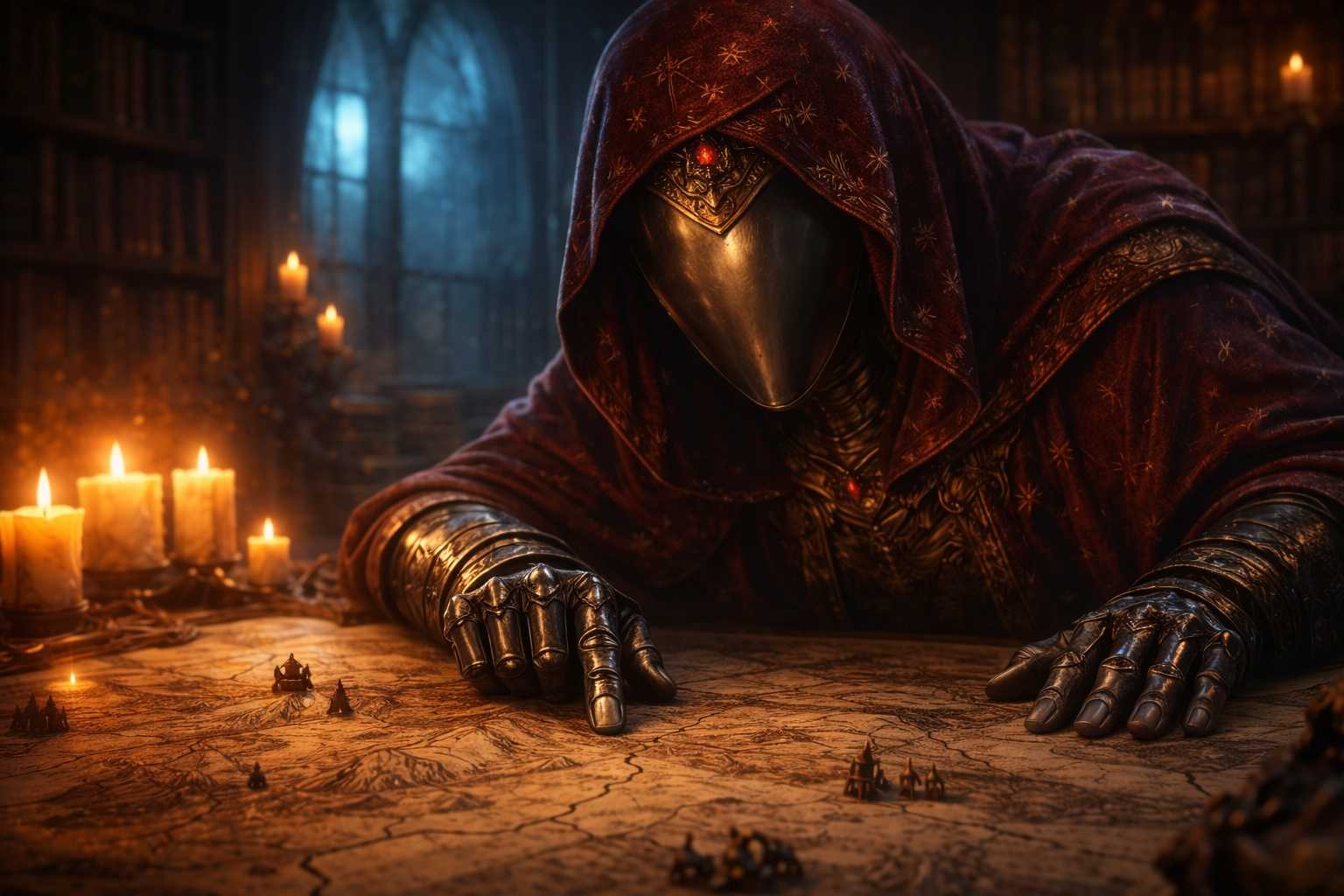
Meridia could not make the borders agree.
The newest map was neatly drawn, its ink still sharp. She laid a finger along the eastern boundary and compared it with the three older sheets. Each put the line in a different place.
She weighted the corners with ink bottles and began a summary, leaving room beside each claim for its source.
Lumeshirean Divine Empire
The largest human nation, or so it claimed. The Lumeshirean Divine Empire held its borders through a combination of faith, paladins, and a political machinery that even its own citizens struggled to understand.
“The Empire and Contia renew their agreements. Both maintain troops along the disputed border.”
Meridia noted: Grukmar raids in the south; pressure from Frostgard in the north. Official histories describe an empire united under faith and duty. The garrison reports I have seen contain repeated requests for men. Several enclosures marked “unexplained” are missing.
Contian Theocracy
Where the Contian Theocracy began and the Academy ended was difficult to establish from the maps. Meridia found the same tower marked as a temple on one sheet and an academy on another.
“Contia declares neutrality. Its several factions reserve the right to make separate agreements.”
Meridia underlined neutrality and wrote beside it: Which faction signed this?
A knock at the door.
She didn’t move to cover the maps. That would only make it worse.
“Tea, Sage Meridia.” Lenn, the junior archivist, entered with a tray. He set it on the only clear corner of the desk, then his eyes traveled across the spread maps. His hand froze on the tray’s edge.
“Those are from the sealed wing.”
“Research for the curriculum review,” she said, not looking up.
“The curriculum review ended last month.”
“Then I’m slow.” She dipped her quill. “Thank you for the tea, Lenn.”
He stayed beside the desk, looking at the archive seals. Meridia kept her quill moving.
“I’ll leave the door open,” he said, taking up the empty tray.
“Close it.”
He did.
She wrote faster after that.
Empire of Frostgard
The northern sheets named Frostgard beyond the mountain passes. Their marginal songs described warriors carving histories into ice. A southern copy called them barbarians; Meridia could not find an earlier source for its account.
“The northern reaches of Frostgard are plagued by giants, posing a constant threat to the Norths.”
Meridia’s note: Frostgard’s public reports attribute losses to giants and weather. Copies of wardens’ letters mention settlements found empty between supply runs. No list of the missing accompanies them.
Mountain Kingdom of Stonehold
The dwarves and gnomes of Stonehold built their cities inside the mountains. Fortress-cities, they called them. The ring of hammers on anvils never stopped, if you believed the poets. The engineers described a different sound: cracks in stone that shouldn’t crack. Cold where there should be warmth.

The official border reports named Grukmar as Stonehold’s chief concern. A sealed mining report instead requested an inspection underground. Meridia flattened a crease in the copy, but the shaft number was illegible.
Kingdom of Elenoria
The elves of Elenoria lived among ancient forests, in cities grown from living wood. Their archery was famous. Their bond to the natural world was the subject of a hundred songs.
The approved maps repeated Elenoria’s borders across centuries. Copies of patrol logs described paths that failed to match them, and one mentioned rangers who returned unable to answer questions. Meridia marked that account as unverified; she had no access to the elven archives.
Grukmar Tribes
Outside maps marked the Grukmar Tribes with the names of orc and goblin bands. Beyond their raiding routes, the survey lines stopped. Meridia left the blank areas unshaded.
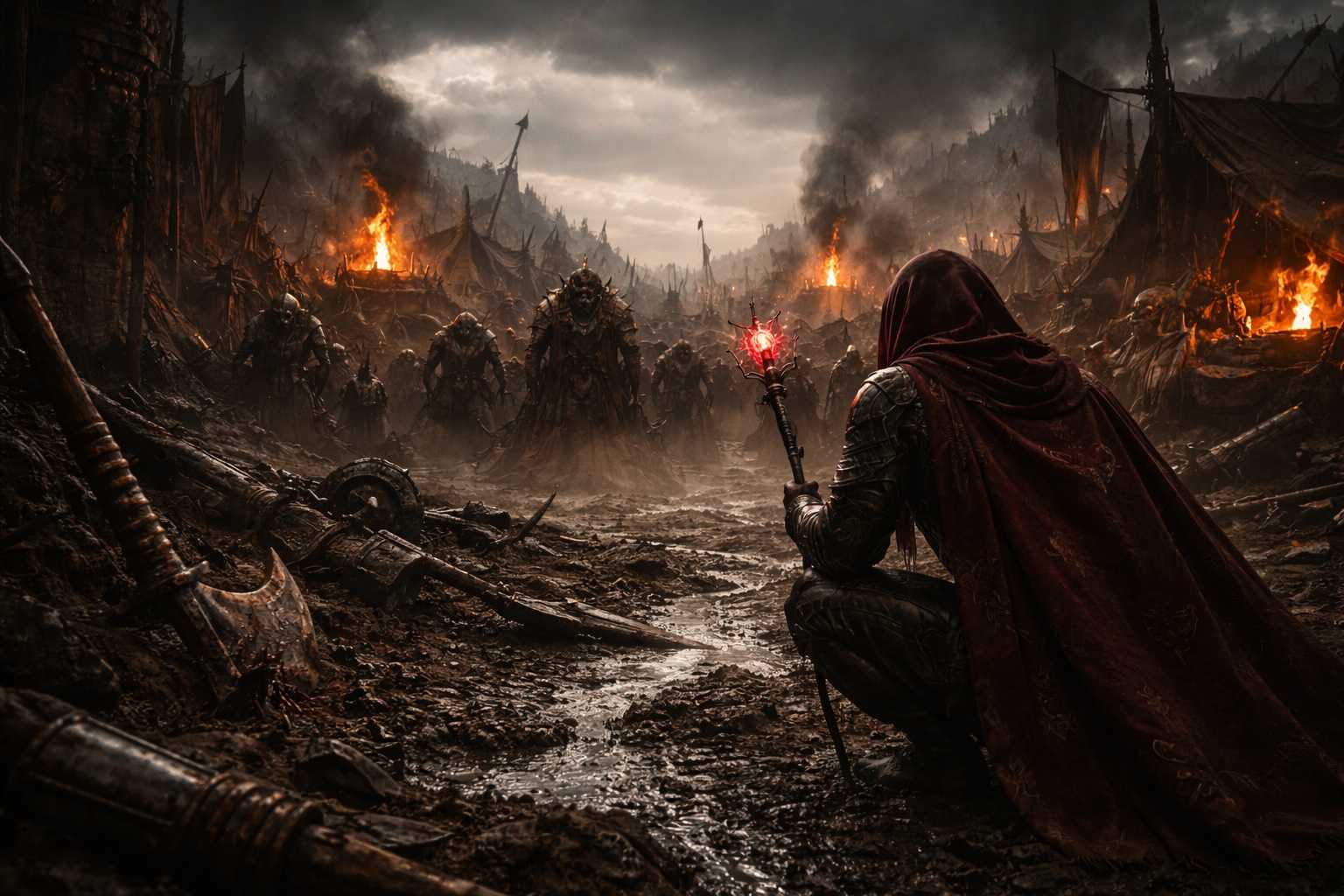
The raids on Stonehold and Lumeshire appeared in both military accounts. In quiet years the generals claimed victory; border captains asked where the raiders had gone. Neither supplied records from inside Grukmar.
Umbra’kor Dominion
The dark elves of the Umbra’kor Dominion lived in caverns below the surface. They served, the histories claimed, as a buffer between the known world and whatever lay beyond.
Meridia found that claim in seven different texts. None of them agreed on what the dark elves were buffering against.
Wyrmreach Dominion
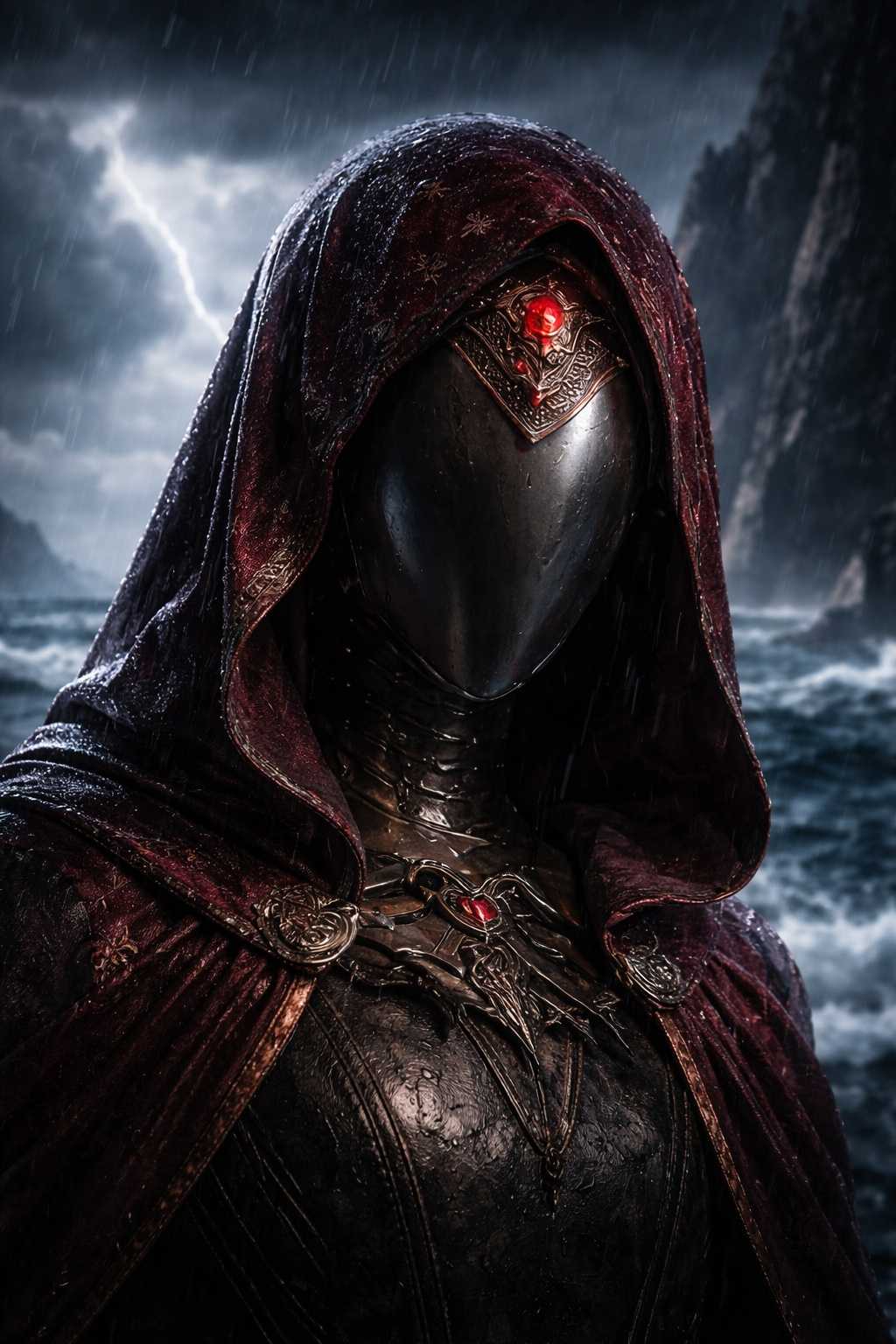
Beyond the tempestuous sea lay the Wyrmreach Dominion.
In song and tale, travelers whispered of terrible things in that distant land, but few who traveled there ever returned to confirm what was true.
Meridia had copied the following claim from a coastal history. Its author named no returning traveler:
“Only the dark elves of Umbra’kor can establish contact with this forsaken realm.”
Meridia set down her quill. She looked at the four maps, their borders disagreeing, their margins filled with annotations that argued with each other across the centuries.
She numbered the maps in the order she had consulted them. The eastern boundary still had four possible positions. She left all four in her notes.
She filed her notes in the drawer she kept locked. Then she picked up the tea Lenn had brought. It was cold.
She drank without taking her eyes off the door.
Compiler’s note: The preceding regional summary was found among Sage Meridia’s personal papers following her transfer to the Outer Library. The Academy has not endorsed its contents. Several passages contradict the approved curriculum. Junior Archivist Lenn, when questioned about the document’s provenance, stated he had no knowledge of its creation.
End of Lore 3 — continues in Lore 1: The Contian Theocracy’s Quest for Magical Supremacy
Previous Article
Nothingness and the Second Sun

Table Of Contents
Related Posts
Stonehold
Forge and Fire: The Mountain Kingdom of Stonehold's Stand Against ChaosLore
April 07, 2024
4 min

© 2026, All Rights Reserved.
Quick Links
Legal Stuff