


Chapter 17 | Part 4
Twelve hours felt like twelve days.
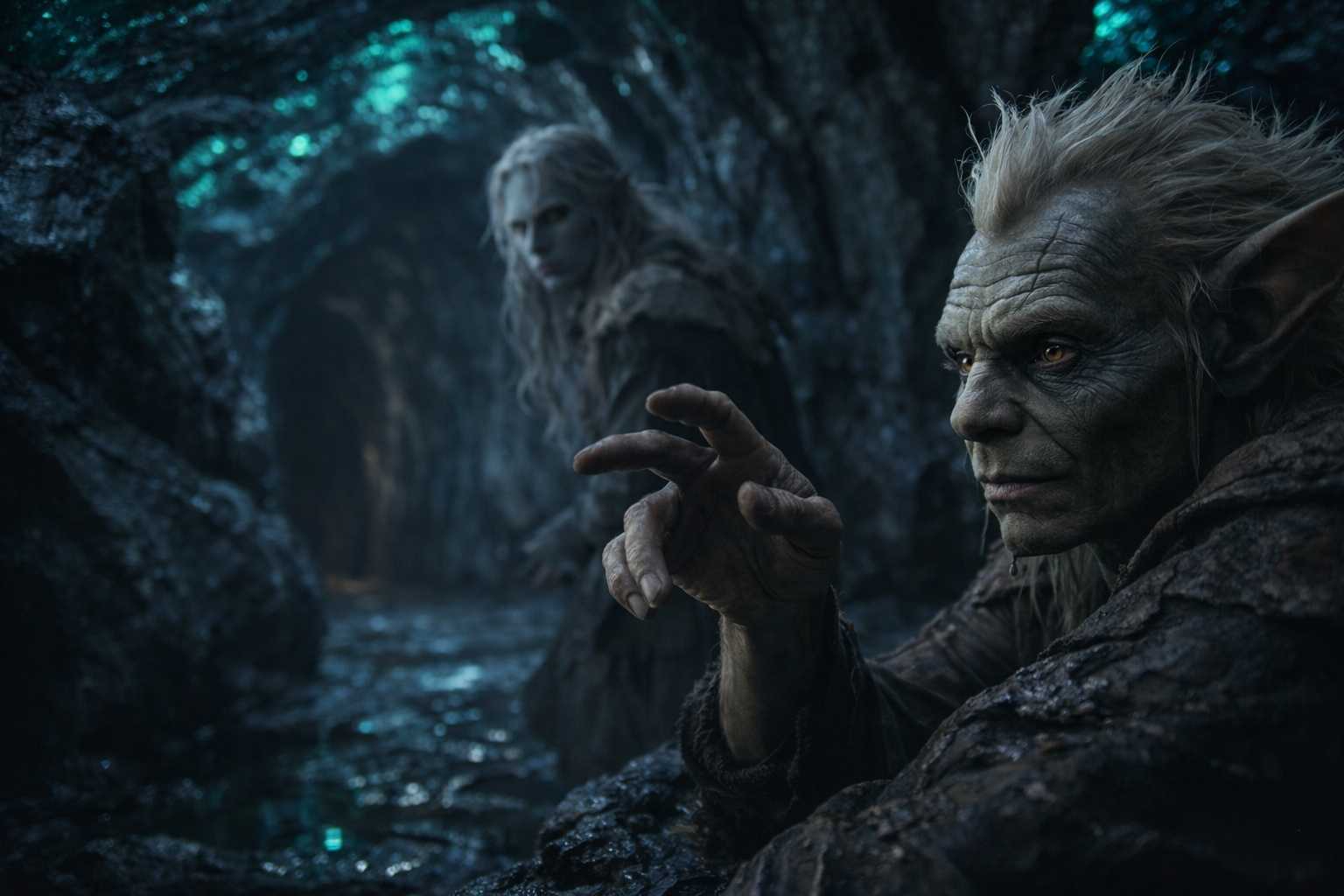
Drusniel explored the caves to pass the time—not deep enough to lose his way, but enough to map the immediate passages. The obsidian formations created natural chambers, some large enough to hold dozens of people, others barely wide enough to squeeze through.
In the sixth hour, Srietz started talking.

“Srietz was not always Srietz.” The goblin’s voice echoed strangely off the volcanic glass. “Srietz had a name before. A different name. Given name, not chosen name.”
Drusniel paused his exploration. “What happened to it?”
“Vexrath took it.” The name came out flat, emotionless—a wound too old to still bleed. “The necromancer. Srietz’s… master. Owner. The one who bought Srietz from the slavers who bought Srietz from the raiders who took Srietz from—” He stopped. “It doesn’t matter where. What matters is Vexrath.”
“What did he do?”
“Made Srietz useful.” The goblin moved to sit near Drusniel, close enough to talk but not close enough to touch. “Srietz knew alchemy before. Village knowledge, passed down. Vexrath saw potential. Vexrath cultivated potential. Vexrath made Srietz the best alchemist Srietz could be, because Vexrath needed results.”
“And the name?”
“Vexrath doesn’t allow names. Names are for people. Srietz was… equipment. Valuable equipment, maintained carefully, but still equipment.” A pause. “When Srietz escaped, Srietz chose a new name. Not the old one—that person died in Vexrath’s laboratory. Srietz is new. Srietz survives.”
Drusniel considered this. The way Srietz referred to himself in third person, the transactional view of relationships, the constant calculation of costs and benefits—all of it made more sense now.
“You think Elion won’t come back.”
“Srietz thinks Elion might not come back. There is a difference.” The goblin’s eyes reflected the phosphorescent glow. “Srietz has learned: people leave. People die. People choose themselves when choosing becomes necessary. This is not criticism. This is observation.”
“Elion chose us. He transformed knowing it might kill him.”
“Elion chose to try. Whether he succeeds is a different question. Whether he returns after succeeding is another question still.” Srietz shrugged—a small, tight movement. “Srietz does not trust easily. Srietz has found trust to be… expensive.”
“What would it take? For you to trust someone?”
“Actions. Consistent actions over time. Words mean nothing—Vexrath was very good with words. But actions have weight. Actions prove intent.” The goblin looked toward the cave entrance, toward the darkness where Elion had disappeared. “If the shapeshifter returns with supplies, Srietz will trust him more. Not completely. But more.”
“And if he doesn’t?”
“Then Srietz will have learned something valuable about shapeshifters.”
Drusniel wanted to argue. Wanted to insist that Elion’s choice had already proven something about loyalty, about sacrifice. But he understood Srietz’s perspective too well. Trust built on a single action was fragile. Trust built on consistent behavior was the only kind that lasted.
“I’m not like Vexrath,” he said. “Whatever happens—I won’t treat you as equipment.”
“Srietz believes you believe that.” A pause. “Srietz will watch and see if actions match belief.”
Fair enough. He couldn’t ask for more than that.
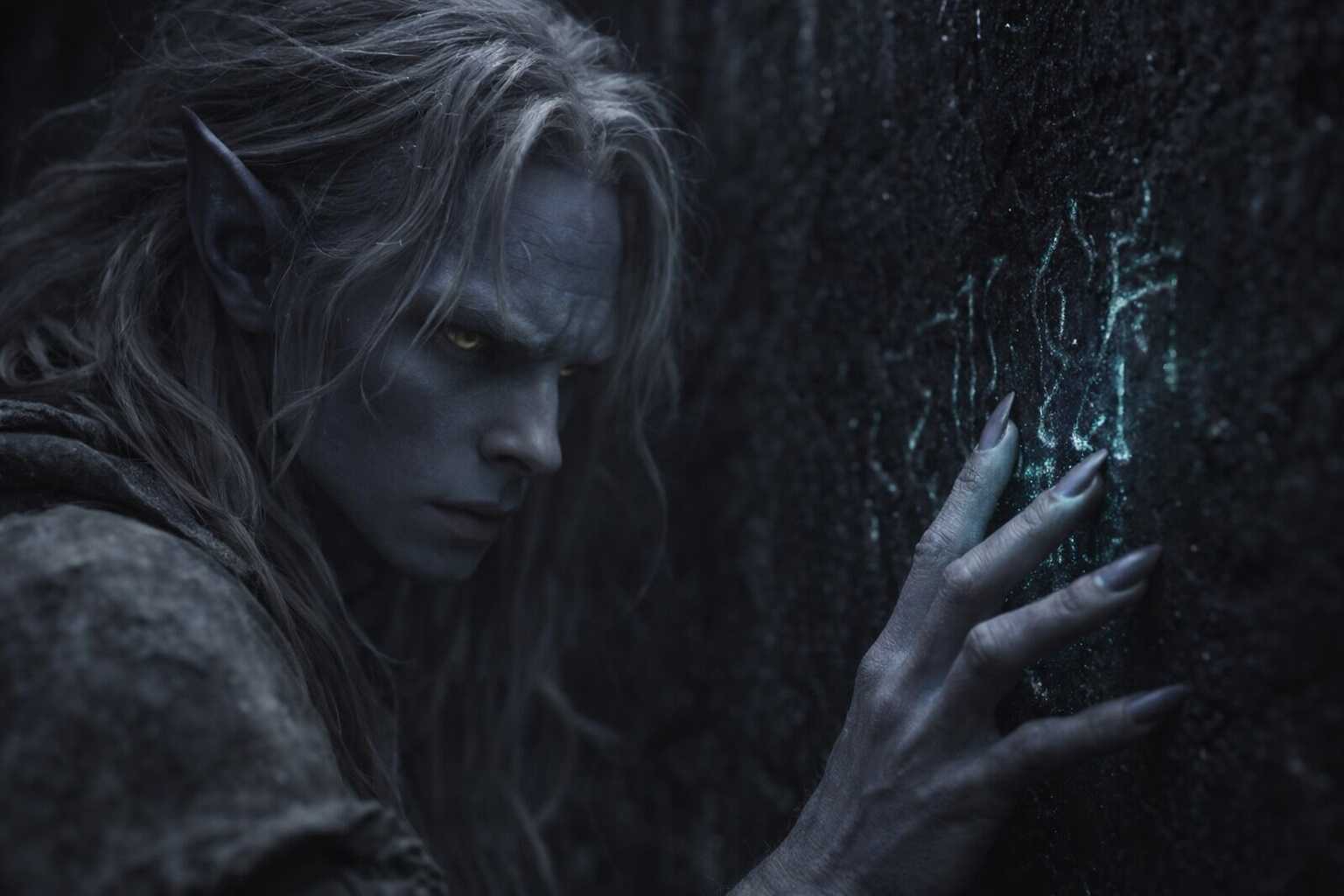
The hours continued to pass. Drusniel explored further, mapping passages in his mind, counting steps and turns. In the deepest part of the cave system, where the phosphorescent glow gave way to pure darkness, he found something unexpected.
Writing.
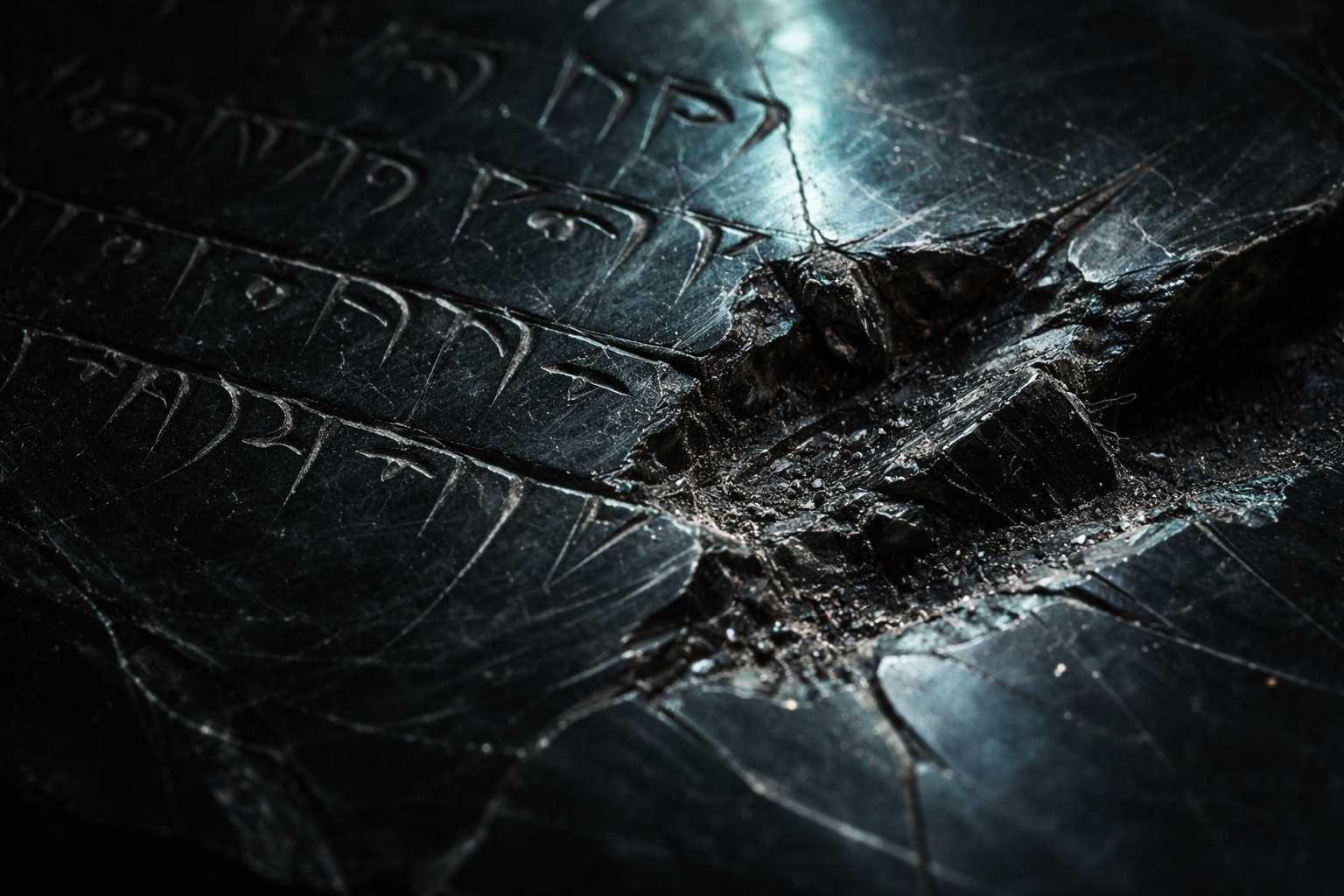
Carved into the obsidian wall, nearly invisible until his fingers brushed across it. Letters he recognized—an old dialect, archaic even by drow standards. The kind of script Annariel had made him learn during their studies together, insisting that understanding the past was essential to navigating the present.
“The prison holds but the cracks spread. Dual nature may cross where single nature cannot. Guard the barriers. Guard the seals. Guard against what waits in the dark between—”
The text ended abruptly. Not worn away or faded—deliberately destroyed. Someone had carved these words and then someone else had gouged away what came next.
Prison. Barriers. Dual nature.
The words resonated with something in his memory. The Voice’s careful non-explanations. The way the barrier had felt when he’d crossed it. His own air and water affinities, combined in ways that apparently weren’t supposed to be possible.
Dual nature may cross where single nature cannot.
He pulled his hand away from the wall as if burned. Whatever this meant—whatever ancient truth was hidden in these fragments—he wasn’t sure he wanted to know.
Not yet. Maybe not ever.
He made his way back to where Srietz waited, the goblin’s eyes tracking his return with concern in his expression.
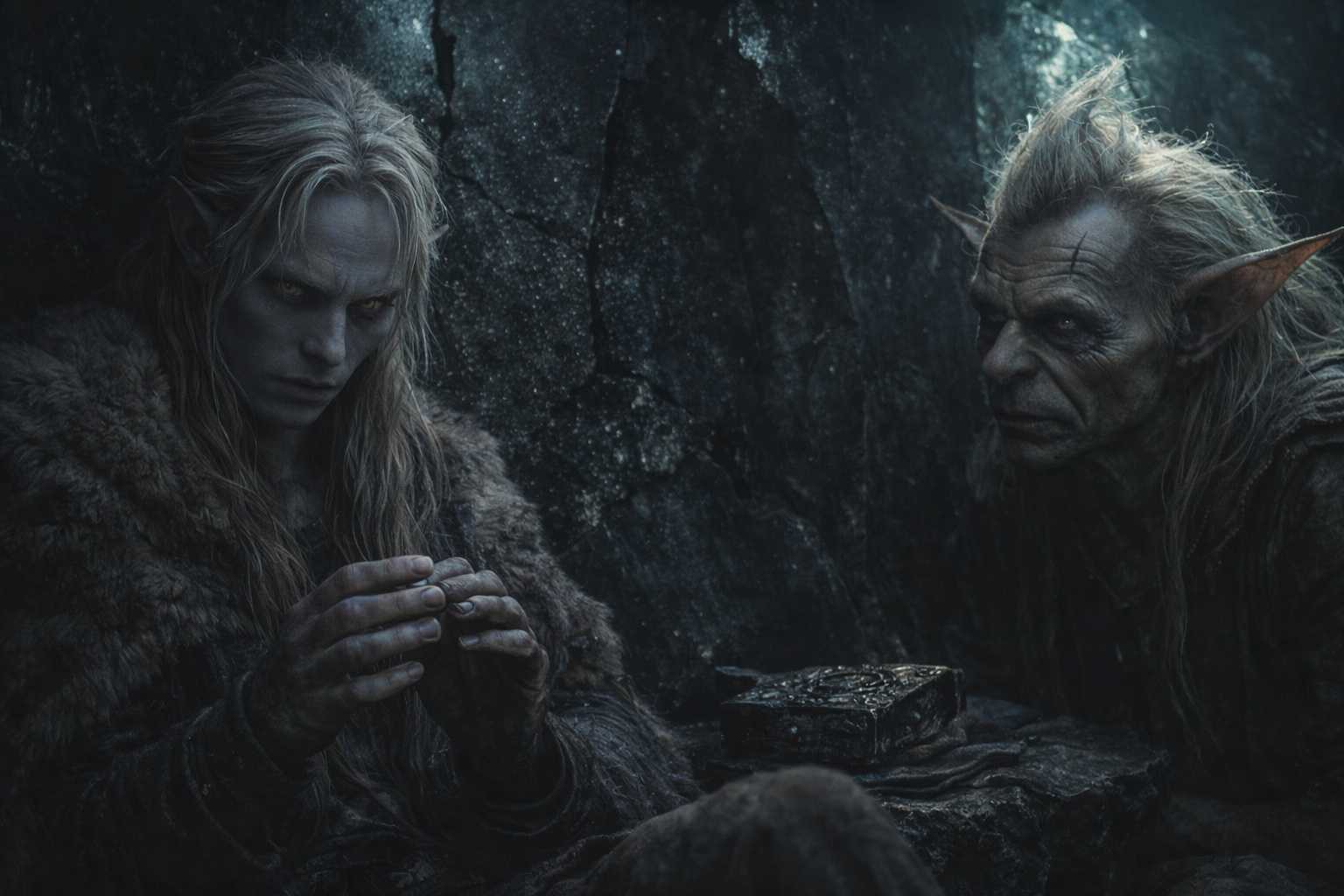
“Srietz heard nothing. No sounds of pursuit or discovery.”
“I found something. Old writing.” Drusniel sat down heavily. “I don’t know what it means.”
“Srietz finds it best not to know things. Knowing attracts attention. Attention attracts danger.” The goblin tilted his head. “But Srietz suspects you are not the type to leave mysteries uninvestigated.”
“No. I’m not.”
“Then Srietz will watch. And perhaps learn whether curiosity kills drow as thoroughly as it kills other things.”
They settled into silence again. The wait continued.
In the deepest part of the cave, the ancient writing waited too—patient as only carved stone could be, holding secrets that someone had tried very hard to destroy.
End of Chapter 17.4 —> 17.5: The Second Choice: The Writing
Previous Article
The Second Choice: The TransformationNext Article
The Second Choice: The Writing

Related Posts

© 2026, All Rights Reserved.
Quick Links
Legal Stuff