


Chapter 8 | Part 2
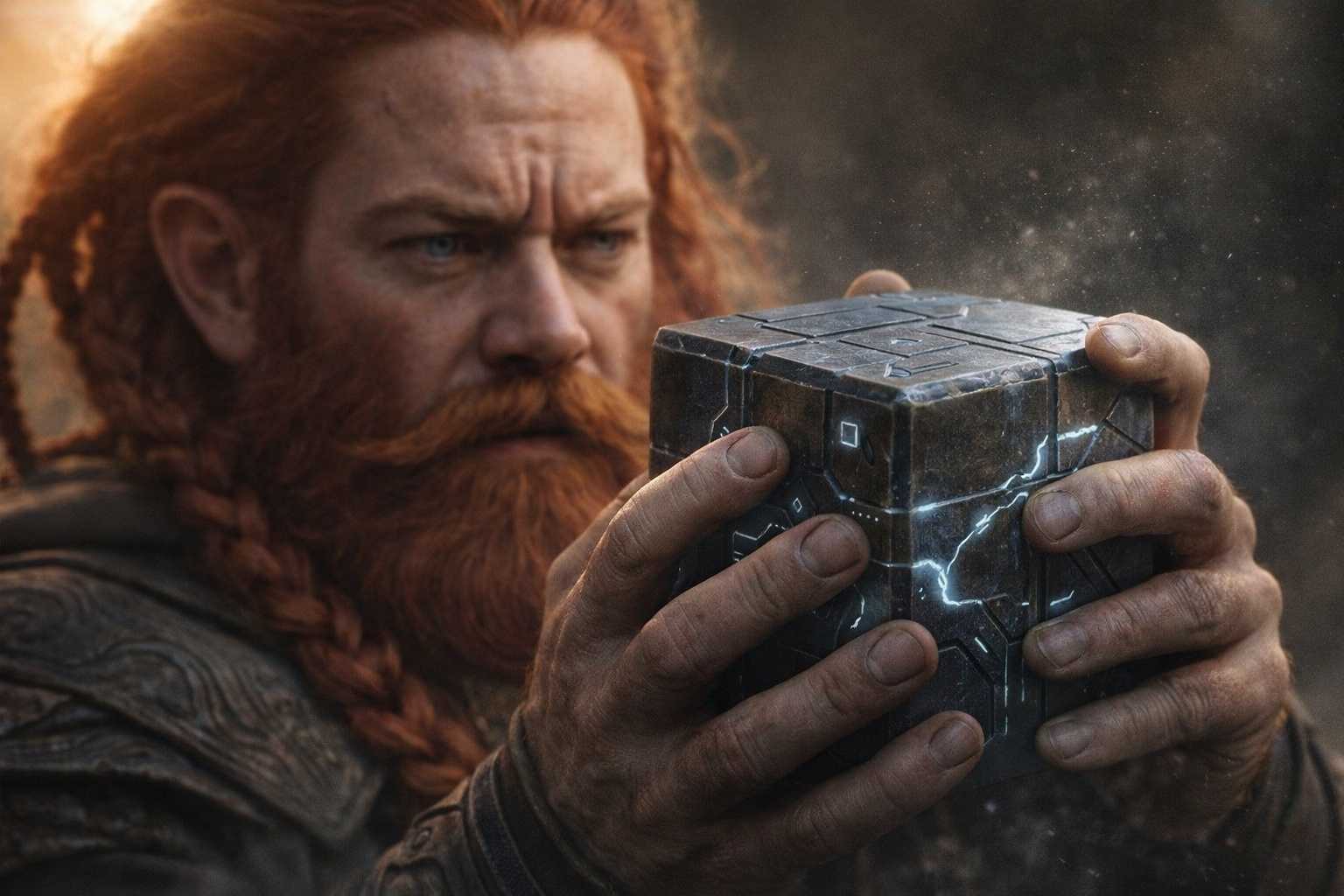
They stood at the roadside for a long moment, watching the cube pulse.
The light came in waves—bright, dim, bright again—like breathing. But it wasn’t regular. The rhythm shifted, accelerated, slowed down. Unpredictable. Mechanical in its wrongness.
Balin edged closer, curiosity winning over caution. “What does it feel like? Power? Magic?”
Dulint tightened his grip on the artifact. What did it feel like? He’d held magical objects before—a runestone once, during the war, that had hummed with barely contained energy. That had felt like standing too close to a bonfire. Heat and pressure and the sense of something vast pressing against your skin. The mages who used such things had talked about channels, about flow, about magic as a river that could be directed but never truly controlled.
This was nothing like that.
“No,” he said slowly. “Not power. It feels like… absence.”
“Absence?”
How to explain? When Dulint held the cube, the world didn’t feel fuller. It felt emptier. Like something that should be there had been carved out. A hole in the shape of presence. He remembered the mines—the way you could feel a cavity before you reached it. The way the stone changed, the way the air moved differently, the subtle wrongness that warned you of empty space ahead.
This was that wrongness. Multiplied. Concentrated into a shape he could hold in his hands.
“When I hold it,” he said, “something is missing. Not added. Missing.”
Balin frowned. “That doesn’t make sense.”
“I know.” Dulint turned the cube again. The glow stayed fixed, pointing north-east, indifferent to his movements. “Magic is supposed to be… more. This is less. Like it’s pulling at something I can’t see. Like it’s creating a pressure that something else is responding to.”
He remembered the way the witch-woman had looked at it. The way her eyes had gone distant and her voice had changed—deeper, older, like someone else was speaking through her. You carry a weight that pulls, she’d said. A hunger that will draw what sleeps. What the cube holds, the world will answer.
He hadn’t understood then. He wasn’t sure he understood now.
“Something about it feels hungry,” Dulint said. “Like it’s pulling. Or maybe…” He searched for the right word. “Calling.”
“Calls what?”
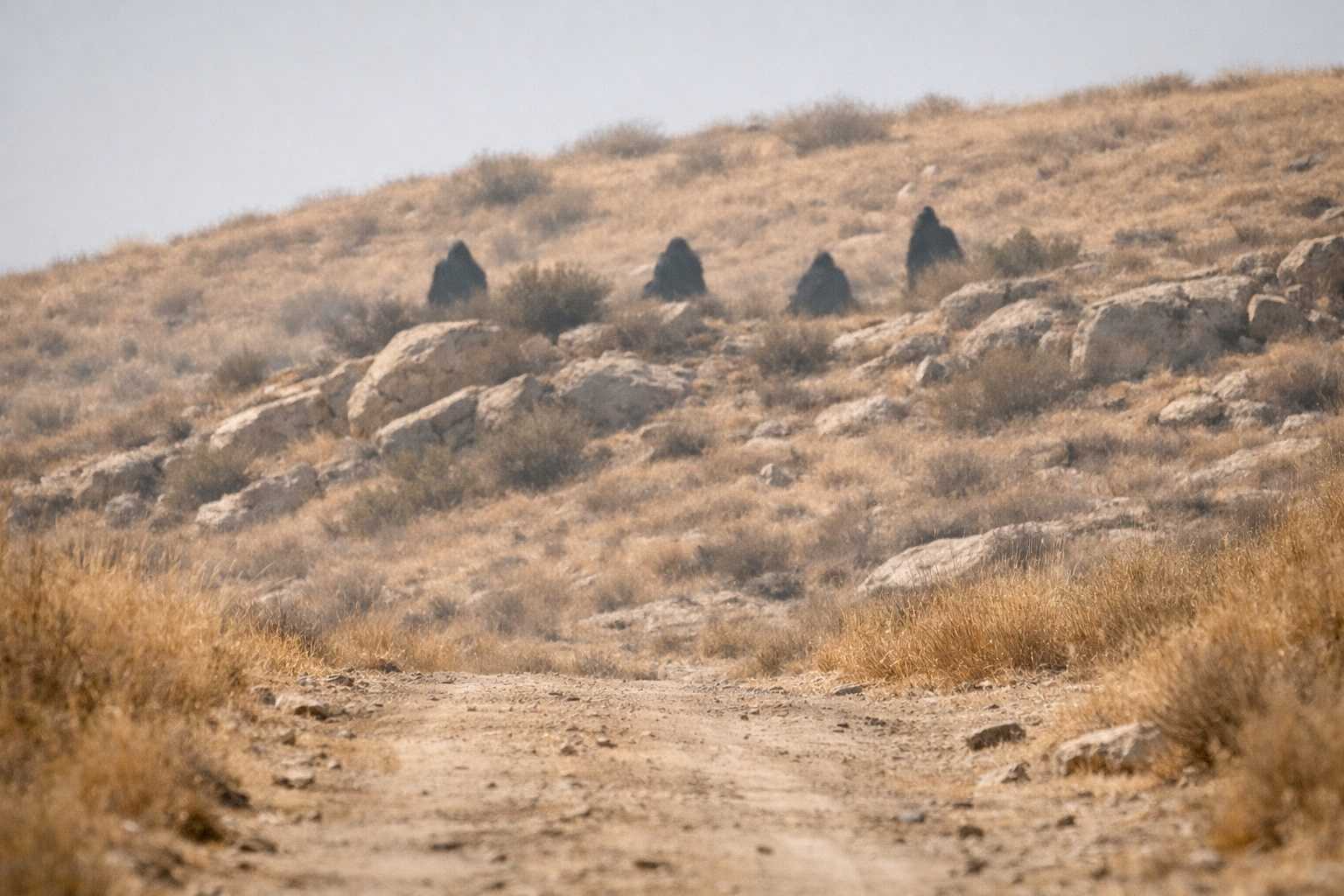
Dulint didn’t answer. His attention had snagged on something at the edge of his vision—a flicker of movement on the hillside behind them. Where they’d walked an hour ago. His war instincts kicked in before his conscious mind caught up. Threat assessment. Distance calculation. The automatic functions of a man who’d spent three years of his youth watching for enemies.
“Uncle?”
“Quiet.” Dulint’s voice dropped to the tone he’d used during the war, when sound meant death. He shaded his eyes against the afternoon sun and squinted at the distant road.
There. A figure. No—figures. Multiple. Moving in their direction. Not casually. Not like travelers enjoying the road. They moved with purpose. With coordination.
“Something in the distance,” Dulint said. “Movement where there shouldn’t be movement.”
Balin turned to look. “Travelers? Other merchants?”
“Maybe.” But Dulint didn’t believe it. The timing was too precise. Three weeks of nothing, and then the cube wakes up and suddenly people appear on an empty road. His war instincts screamed at him—the same instincts that had kept him alive through two campaigns and a siege that killed better dwarves than him.

It calls.
He looked down at the artifact in his hands. Warm, pointing, doing whatever had drawn those figures out of nowhere.

“We need to move,” Dulint said. “Now.”
End of Chapter 8.2 —> 8.3: The Road from Zuraldi: The Nephew”s Doubt
Previous Article
The Road from Zuraldi: The AwakeningNext Article
The Road from Zuraldi: The Nephew''s Doubt

Related Posts
Stonehold
Forge and Fire: The Mountain Kingdom of Stonehold's Stand Against ChaosLore
April 07, 2024
4 min

© 2026, All Rights Reserved.
Quick Links
Legal Stuff