


Chapter 27 | Part 4 | The Way Back
The tunnel he’d come through was gone. Sealed by heat and fallen stone, the passage reduced to a crack too narrow for his arm.
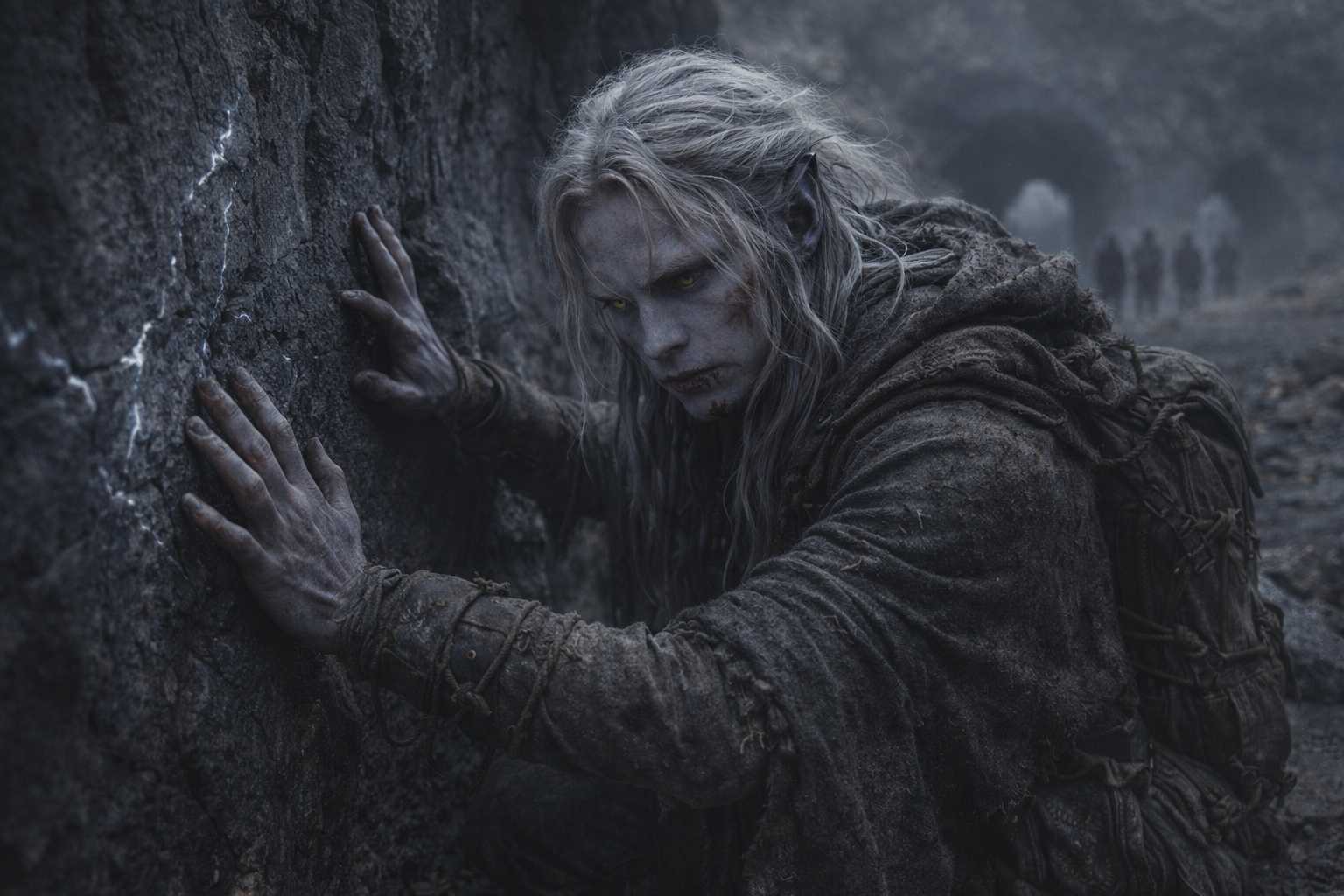
He stood in front of the blockage and let his fingers tell him what his eyes already knew. The collapse was fresh, the broken edges sharp under his fingertips, the stone still warm from whatever thermal surge had brought the ceiling down. Fine dust hung in the air, catching the faint blue-white glow from the crystal veins behind him. The compound had worn off entirely now. His body moved at its own pace, which was the pace of a man who had been running, climbing, and bleeding inside a volcano for hours, which was slow.
He turned back.
The northwest tunnel was open. The air moving through it was cooler than anything he’d felt since entering the mountain. That fact was sufficient. Cool air meant distance from the volcanic core, and distance from the core meant closer to the surface, and closer to the surface meant out. The logic was linear. His body appreciated linear.
He walked.
Without the Scorchshells, the mountain was his to read alone. His left hand never left the wall. Every ten paces, he stopped, pressed his palm flat against the stone, and felt. Temperature. Vibration. The faint pressure of air moving through fissures he couldn’t see. The cracks in the basalt told him stories if he listened with his fingers instead of his ears. Where stress fractures radiated from a collapse, the path was compromised. Where the grain ran smooth and unbroken, the stone had been stable for centuries. Where thin lines of crystal veined the rock, the volcanic energy was closer. Where the veins thinned to nothing, the surface was nearer.
He followed the cold.
The tunnels branched. Three times in the first hour, by his rough count, and each time he stopped at the junction, traced both walls with both hands, and chose the passage where the air was cooler against the back of his knuckles. At the second junction, both tunnels breathed cold. He crouched and pressed his cheek to the stone floor of each. The left one carried a draft that smelled of sulfur, faint but present. The right smelled of nothing. He chose nothing. Sulfur meant vents. Vents meant activity.
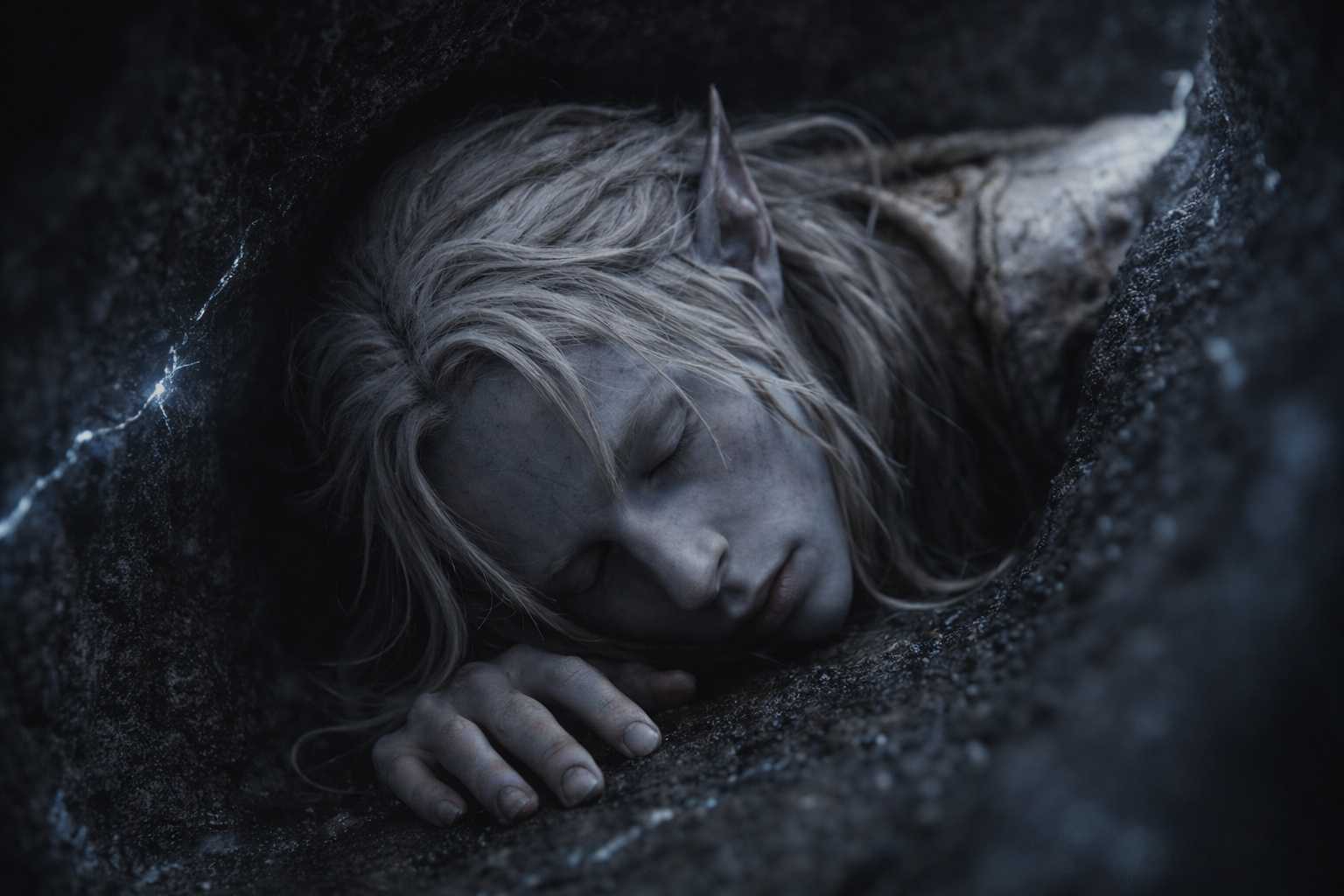
The crystals in his pack hummed at each junction, a subtle shift in frequency that he noticed without understanding. He didn’t try to understand it. He noted it. Filed it. Kept walking.
His body was failing in the predictable ways. The muscles in his calves had tightened past the point of discomfort and into the territory where each step required negotiation. His shoulders ached where the pack straps had cut into tissue that hadn’t been designed for hours of load-bearing in tunnels built for things without shoulder blades. His right knee clicked with each stride, a sound like a nail being tapped into dry wood, regular and uninformative. Wear. Fatigue. Nothing structural.
He kept walking.
The tunnel climbed. Gradually at first, then steeply enough that he needed both hands and had to brace his pack against the wall behind him to keep its weight from pulling him backward. The crystals shifted and clicked against each other in the leather, warm against his spine. The stone under his hands was cool. Actually cool, not the relative coolness of slightly-less-hot. Cold enough that moisture condensed on its surface and made his grip uncertain.
He was close.
A wind found him. Not the faint pressure-difference he’d been reading through cracks, but a proper draft that pushed against his face and carried on it the smell of ash and scorched earth and something underneath those, something that was almost clean. Outside air. Air that had been in a sky and moved through an atmosphere and touched something other than stone.
He followed it like a drowning man follows the direction of up.
The tunnel narrowed, then widened, then narrowed again in a pattern that felt organic, as if the passage had been carved by water that no longer ran here. His hand found a ledge. He pulled himself up. Another ledge. His arms shook. He pulled himself up again. The wind grew stronger with each climb, and the crystal veins in the walls disappeared entirely, replaced by plain basalt, dark and cold and blessedly ordinary.
Light.
Not the blue-white of crystal luminescence or the red of volcanic heat. Grey light. Diffuse and flat and arriving from a direction that was unambiguously up. Daylight filtered through stone, finding its way down through cracks and gaps in the mountain’s surface, barely enough to see by but enough to know that the sky was there, above him, reachable.
He climbed toward it. The passage steepened into a near-vertical chimney, and he braced his back against one wall and his feet against the other and pushed upward, inch by inch, the pack on his chest now, the crystals pressing warm against his ribs. His arms burned. His legs shook. The light brightened with each body-length of altitude, and the wind pushed down around him as if the mountain were exhaling him.
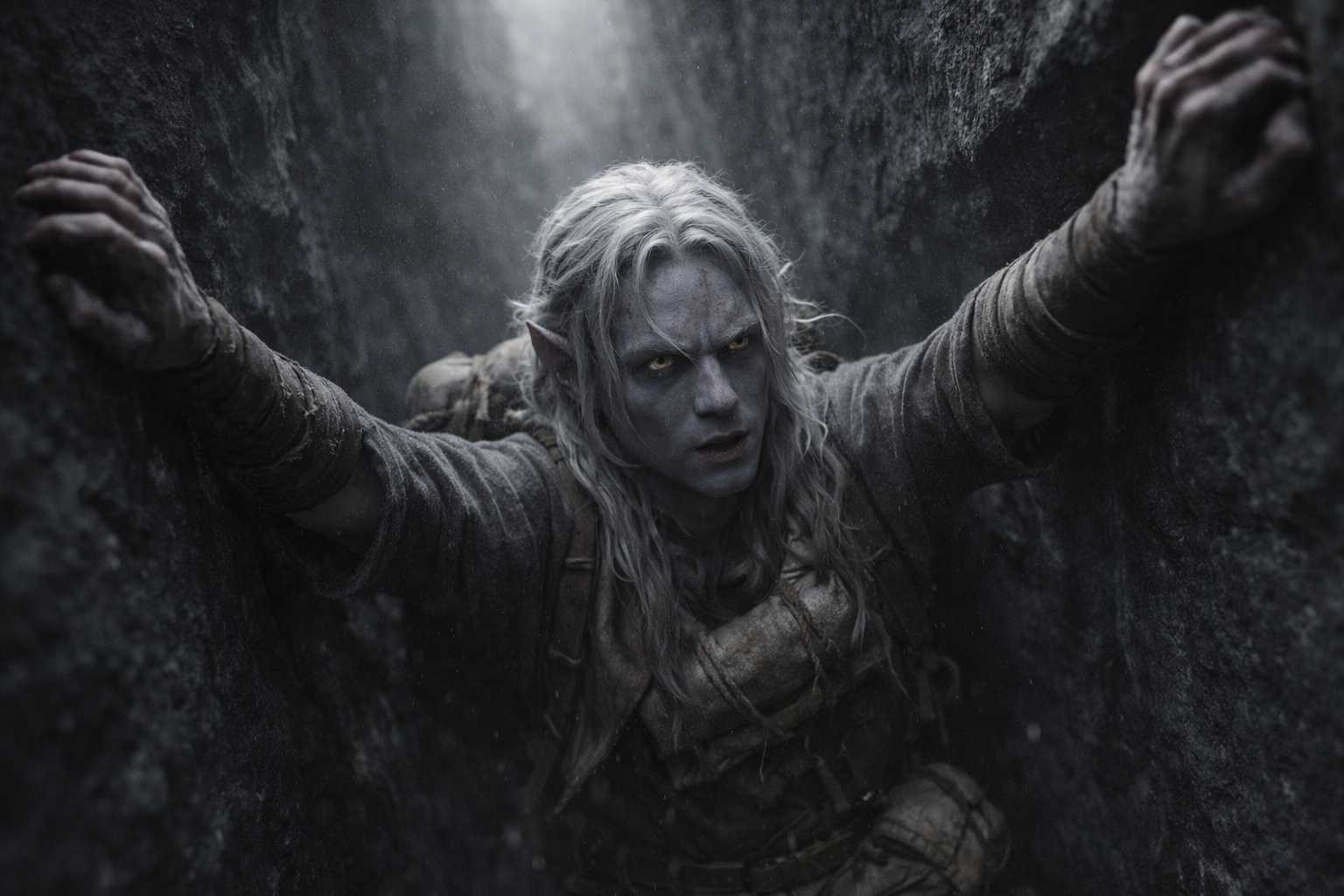
The opening was narrow. He turned sideways, pushed the pack through first, then followed, stone scraping his chest and back and pulling at his clothing, and then the sky was there. Above him. Around him. A grey overcast expanse that stretched in every direction and contained nothing more extraordinary than clouds, and he stood on the mountainside and breathed air that tasted of ash and distance and let his legs fold until he was sitting on the volcanic gravel with his pack between his knees.
The world outside the mountain was unchanged. The volcanic plate-fields stretched in every direction, grey and cooling, the recent eruption’s evidence visible in fresh flows that had reshaped the terrain he’d studied from above. Steam rose from fissures in the new stone. The air was acrid and warm but a different warm, the kind that came from above instead of below.
His nose was crusted with dried blood. His elbows were raw. His hands were steady, though he couldn’t have said why. Something about the crystals against his body, or the direction lodged in his chest, or the simple fact of being alive when the mountain had offered several alternatives.
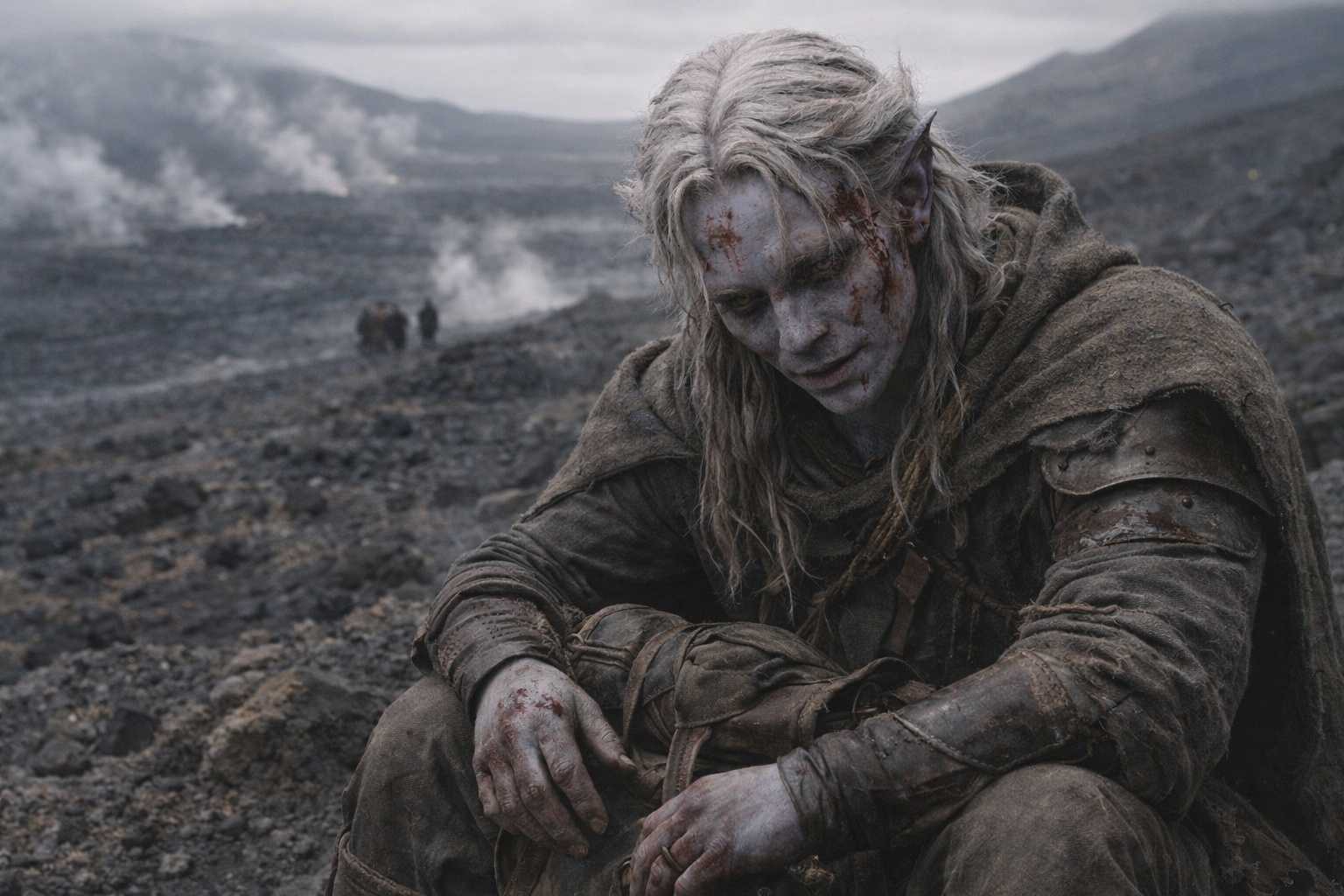
Movement below. On the slope beneath him, where the terrain leveled into the shelf they’d camped on before the crossing, a small green figure was running. Legs too short for the stride they were attempting, arms pumping, equipment bouncing, moving uphill with the desperate gracelessness of someone who had been watching a tunnel entrance for hours and had given up expecting anything good.
Srietz reached him winded and wild-eyed. Her hands found his shoulders and squeezed, then released, then squeezed again, as if confirming solidity.
“What happened?” Her voice was pitched high. Her ears were flat against her skull.
Drusniel blinked against the daylight. The greyness of the overcast sky felt blinding after the tunnels. Behind him, in his pack, the crystals hummed.
“I found crystals,” he said. “And I know where Szoravel is.”
“How?”
Drusniel wiped his nose. The dried blood flaked under his fingers, brown and brittle.
“I can’t explain it. But I know.”
Srietz’s ears flattened further, which he hadn’t thought possible. Her eyes darted from his face to his pack to the tunnel entrance behind him and back.
“Srietz does not find that reassuring.”
“Neither do I,” Drusniel said.
End of Chapter 27.4 —> 27.5: The Price of Passage: The Far Side
Previous Article
The Price of Passage: The HumNext Article
The Price of Passage: The Far Side

Related Posts

© 2026, All Rights Reserved.
Quick Links
Legal Stuff