


Chapter 34 | Part 5 | The Interruption
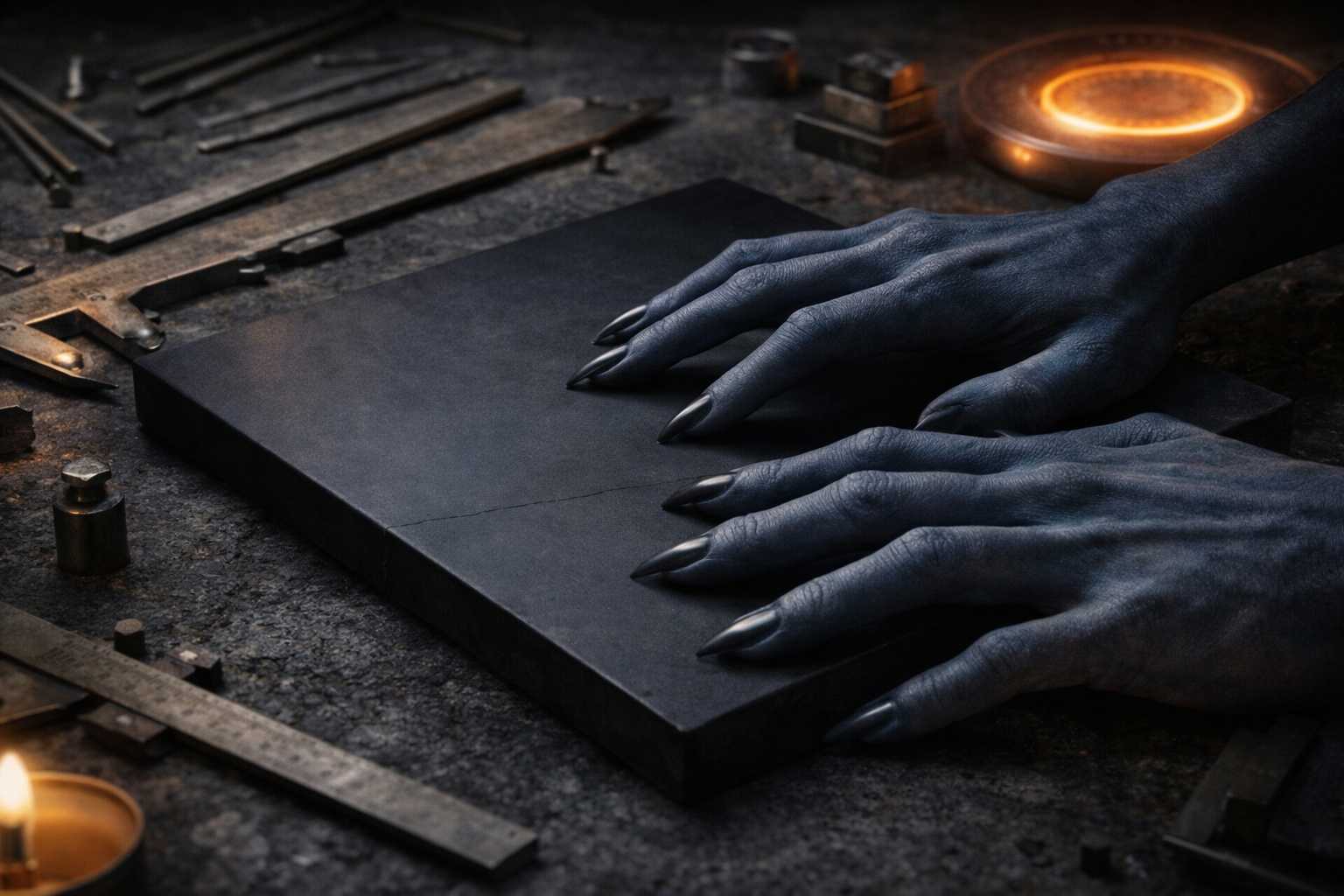
Szoravel began the first calibration session at dawn.
The Null sat on the workbench between them, unwrapped, its dark surface absorbing the lamplight the way it absorbed everything else. Szoravel had placed measuring instruments around it in a precise arrangement, thin rods and calibrated stones and a disc of dark metal that pulsed at the barrier’s frequency.
“Hold it,” Szoravel said. “Don’t activate. Interface only. Let the artifact register your frequency and let yourself register its.”
Drusniel placed his hands on the Null. The surface was warm. It always was. The warmth of something that was processing continuously, maintaining a state of readiness that had nothing to do with rest. His crystals hummed at his belt, resonating with the Null’s frequency, and the Null responded by shifting slightly, a vibration so fine it was more sensation than sound.
“Good. Hold that. Don’t push.”
He held. The Null’s frequency ran through his hands and up his arms and into the space behind his sternum where the Voice lived and the debts lived and the crystal adaptation lived, and he felt the barrier. Not as a concept. As a physical presence. Distant but real, a membrane of energy and ancient design that sat between Wyrmreach and everything else, degrading at a rate his adapted senses could read like text on a wall.
The degradation was fast. Faster than the measuring rod had suggested. The barrier was thinning in waves, each wave wider than the last, the intervals between them shortening.
“The window will be—” he started.
The door opened.
Nyxara entered the way she entered everything: without permission, without apology, with the settled certainty of someone who had decided her presence was necessary and found the question of invitation irrelevant. She didn’t hurry. She didn’t hesitate. She walked into the chamber and the chamber rearranged itself around her the way rooms always did.

Szoravel’s hands stopped moving. His violet eyes fixed on her with a coldness that wasn’t anger but the state that preceded it. The instruments on the workbench trembled faintly from the resonance Drusniel’s contact with the Null was generating.
“We don’t have three weeks.”
She said it the way she said everything: as fact. As geography. As the next point on a route she’d already committed to walking.
“I’ve received intelligence,” she continued. She didn’t sit. She stood in the center of the chamber, near the widest point, the place she always chose. “The degradation window is closing faster than your models predicted. The acceleration has doubled since you last calibrated.”
“That is not possible.” Szoravel’s voice was ice. His hand found the measuring rod. Held it. The markings pulsed, confirming something he didn’t want confirmed. “The degradation cycle does not double in days.”
“It does when external pressure is applied.”
“What external pressure?”
Nyxara looked at him. The look held history and patience and the particular contempt that comes from watching someone rely on models when reality has already moved past them.
“The system is being used. From the other side. Something is testing the barrier’s integrity, probing for the renewal window. Your three-week timeline was built on natural degradation rates. The rates are no longer natural.”
Szoravel’s jaw tightened. The measuring rod pulsed faster in his hand, confirming, confirming, confirming. He’d been wrong. Not about the facts. About the timing. He’d assumed Nyxara would wait because the winds hadn’t shifted. He’d assumed the barrier would degrade at the rates his instruments had measured yesterday. He’d assumed that control was possible because control was what he did.
Every assumption was breaking simultaneously, and the sound it made was Nyxara’s voice delivering facts she’d known before she sat silent in this room and let him plan.
“You knew,” Szoravel said. His voice had dropped into a register Drusniel hadn’t heard before. Below anger. Below cold. The frequency of someone who has just realized that their model of another person’s patience was the variable that destroyed the plan. “You sat here. You listened to me plan three weeks. And you knew.”
“I knew the situation was accelerating. I did not know by how much until my agents confirmed this morning.”
“Your agents.”
“My sources. Beyond this outpost. Beyond your instruments.”
“You’re overriding me.”
“I am correcting your timeline.”
“MY timeline is built on—”
“Your timeline is built on assumptions about my patience.” She didn’t raise her voice. She didn’t need to. The statement landed with the precision of something that had been true for longer than Szoravel had been planning and was only now being spoken. “And about the system’s behavior. Both assumptions are no longer valid.”
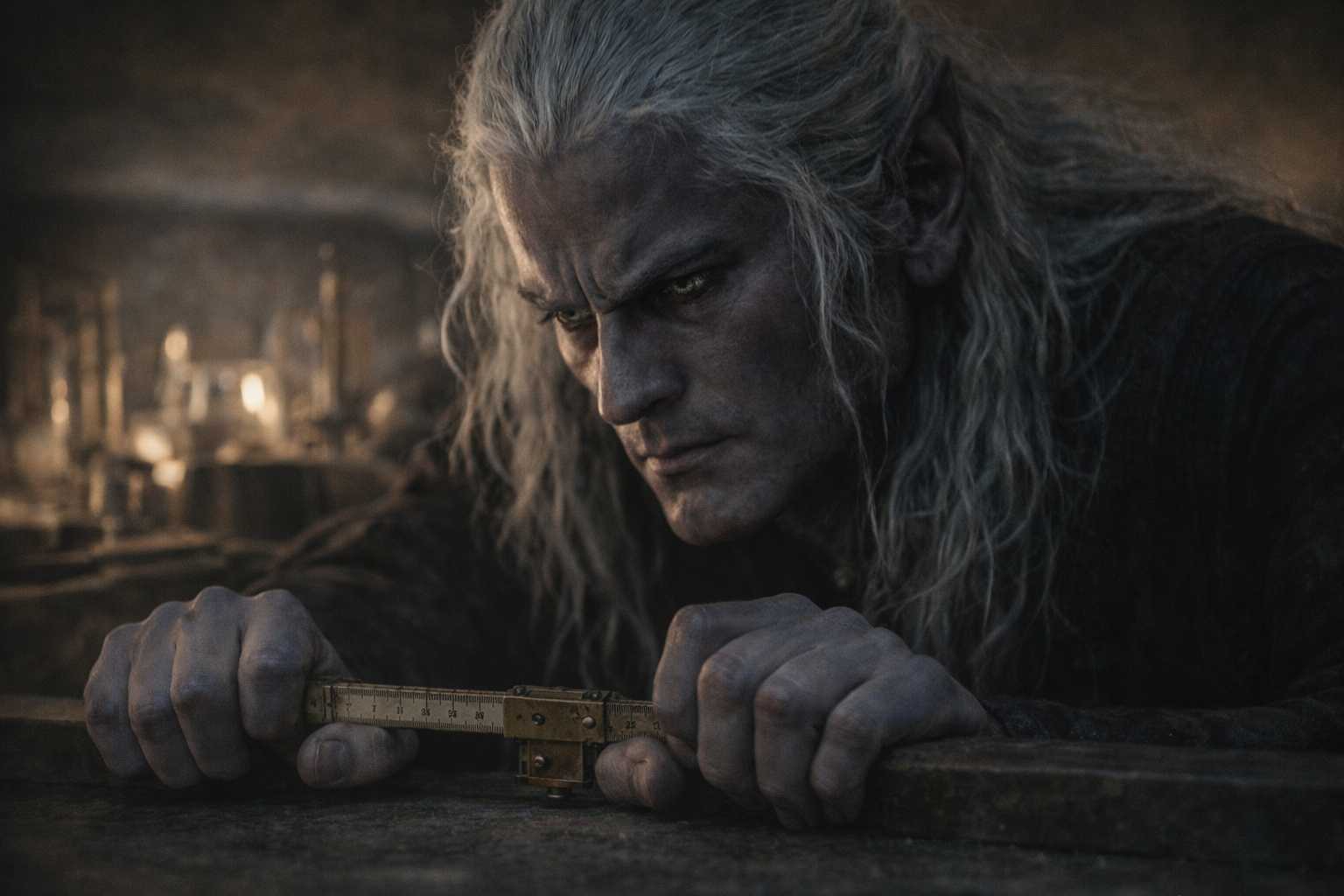
Silence. The kind that follows a structural failure, when the sound of collapse has finished and the settling begins.
Szoravel looked at Drusniel. Not for support. Not for alliance. For assessment. Calculating whether the asset in front of him was ready or whether the plan could be salvaged or whether the only option left was to abandon preparation and gamble on competence.
“How long?” Drusniel asked.
Neither answered immediately. The question sat between them, a demand that both authorities in the room heard differently.
“How long.”
“Days,” Nyxara said. “Not weeks.”
“How many days?”
She met his eyes. “Three. Perhaps four. My sources indicate the probing will force the window open prematurely. When it opens, you must be ready.”
Szoravel’s hands were white on the table edge. The instruments trembled. The Null sat between them, dark and warm and ready for something none of them controlled.
“Then he is not ready,” Szoravel said. His voice had returned to ice, but it was thin ice now, the kind that breaks when you stand on it. “Three days is not enough for calibration. Not enough for approach. Not enough for anything except failure.”
“Then make him ready faster,” Nyxara said. “Or I will.”
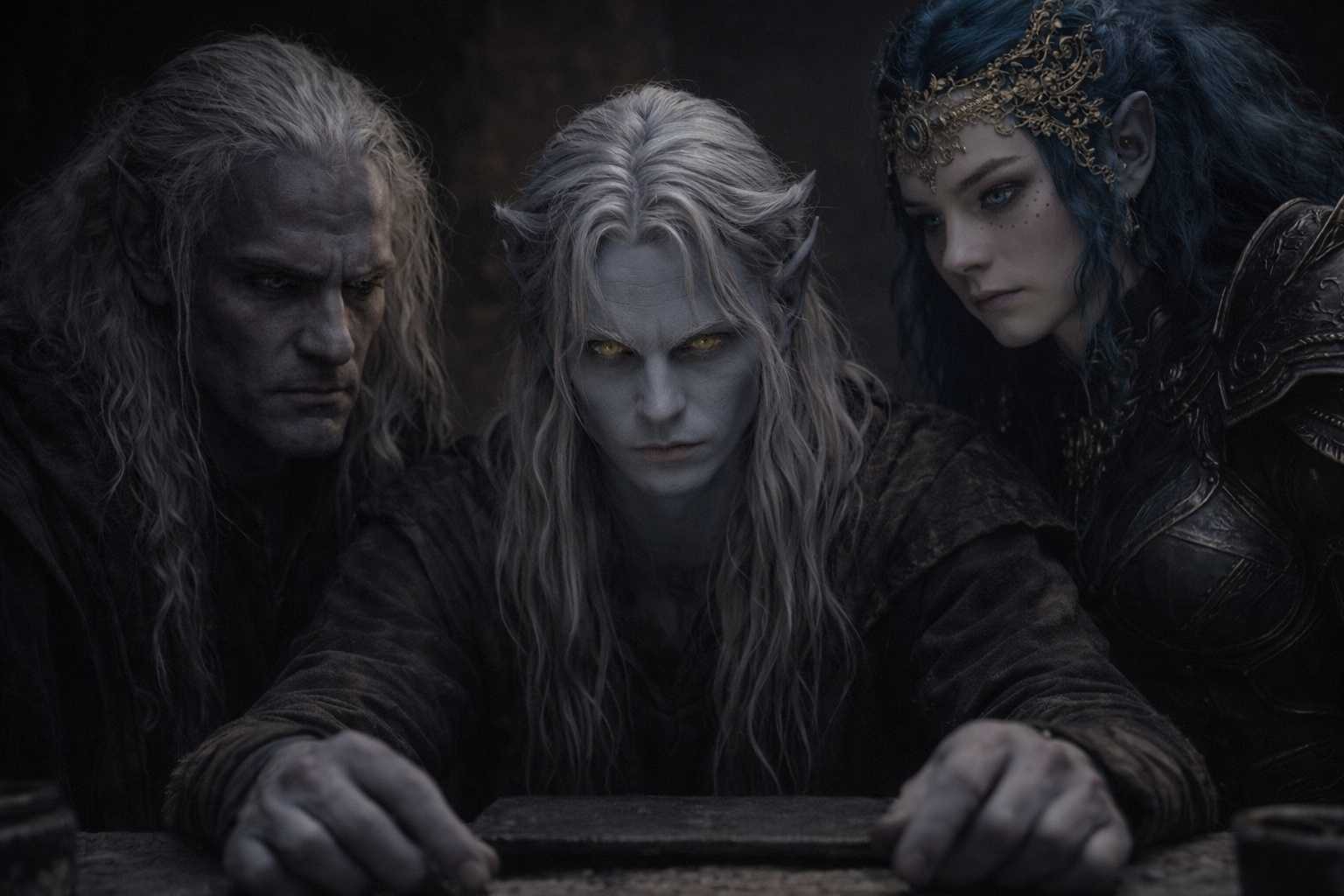
The room held the statement. Szoravel held the measuring rod. Drusniel held the Null. And between them, the timeline that had felt like control twelve hours ago collapsed into a number that was no longer weeks or days but something closer to a countdown, and the clock was running on a mechanism none of them had built and none of them could stop.
Srietz’s voice came from the corridor. Small. Clear. The kind of clarity that cuts because it comes from below the argument, from the place where the argument’s real shape is visible.
“They’re arguing about when, not whether. No one asked if.”

Nobody answered. The question of if had been settled long before this room. By compatibility. By prophecy. By the barrier’s degradation and the Null’s presence and the crystal adaptation that had made Drusniel’s body a key that fit a lock he’d never asked to open.
If was over. When was collapsing. And the only question left was the one nobody was asking, the one that Srietz had identified from the corridor with the precision of someone who had spent his life watching powerful people decide things about less powerful people without consulting them:
Whether Drusniel would be ready when the moment arrived, or whether readiness was a luxury the timeline no longer afforded.
End of Chapter 34.5 —> 35.1: The Map That Bleeds: The Alignment
Previous Article
The Price of Answers: The NightNext Article
The Map That Bleeds: The Alignment

Related Posts

© 2026, All Rights Reserved.
Quick Links
Legal Stuff