



Chapter 35 | Part 1 | The Alignment
Xandor spread the fragments across a flat stone and weighed the corners with river pebbles.
They’d camped in a shallow depression between two ridges, the kind of terrain that blocked the wind but not the view. Aldric had chosen it for the sightlines. Balin had chosen it because it was the first level ground they’d found in six hours of walking. Maris sat at the edge and watched Xandor work because watching someone arrange evidence was better than sitting with the pull in her chest.
The fragments were everything they’d gathered since Zuraldi. Scraps of text Xandor had copied from three different temple libraries before the roads got bad. Maris’s vision accounts, dictated to Balin in the mornings when the details were still sharp, written in his careful hand on paper they couldn’t afford to waste. The Beacon’s behavioral log, which was Dulint’s memory, because nobody had thought to keep records until Aldric suggested it two weeks too late.
“Here.” Xandor tapped a yellowed page with his index finger. The finger was steady. The rest of him was not. His staff leaned against the rock beside him, and Maris noticed he hadn’t spoken to a single plant in three days. “The Shattered Covenant. Fragment nine. ‘When the membrane thins, the system seeks a bearer. Not a hero. Not a chosen instrument. A frequency match. Dual affinity. Air and water, the binding elements.‘”
“You’ve read that to us before,” Aldric said. He was sharpening his blade. The motion was methodical and familiar, the sound of a man who processed information better when his hands were busy.
“I have. But I didn’t have this before.” Xandor placed a second page beside the first. His handwriting, smaller than Balin’s, cramped with the urgency of someone transcribing in poor light. “The Athenaeum fragment. Recovered from the Frostgard monastery, the one that burned. Partial translation: ‘The mechanism requires interface. Living interface. The barrier cannot renew itself. It was not built to. It requires a body that carries both elemental affinities in sufficient concentration to serve as a conduit between the Nexus component and the barrier’s core frequency.‘”
Silence.
The wind moved through the depression. The Beacon hummed inside its wrapping on Dulint’s pack, steady, directional, pointed northeast.
“A conduit,” Dulint said. His voice was flat. Not disbelief. The particular flatness of a man who was hearing confirmed what he’d suspected and wished he hadn’t.
“A living conduit. Air and water affinities. Carrying the Nexus component. The fragment calls it ‘the chassis.‘” Xandor looked at Maris. “The thing you’ve been tracking. The thing the Beacon locked onto. It’s not just an artifact. It’s half of a mechanism. The other half is the person carrying it.”
Maris’s nose throbbed. The left nostril had bled again that morning, unprovoked, a slow leak she’d packed with a strip of cloth and tried to ignore. The Beacon’s frequency had been louder for days. Not sharper. Louder. The way a sound gets louder when you walk toward it, except she wasn’t walking toward anything. It was walking toward the barrier from the other side.
“Now put it together with what she’s seen.” Xandor’s voice changed. Quieter. The tone he used when he was about to say something he’d been holding back. “Maris. The visions. The man you see.”
“Dark elf. Dual affinity. She sees him with the artifact in his pack.” The distance language came automatically. It was easier to describe from the outside when the inside was a place that cost blood. “Crystals on his belt. Walking east through a landscape that shouldn’t exist. Something inside him that the Beacon recognizes and flinches from.”
“Dual affinity,” Xandor repeated. “Air and water.”
“She doesn’t know his affinities.”
“You do. You described wind patterns that respond to his movement. You described water that flows toward him rather than away. You described his body resonating at a frequency the Beacon identifies as compatible.” Xandor’s hands were on the stone, palms down, steadying himself. “He matches. Every criterion the fragments describe. He is the conduit the barrier system is waiting for.”

The Beacon’s hum shifted. Higher. Insistent. As if hearing its function named aloud had given it permission to be louder about what it had been trying to say for weeks.
“And the timing,” Xandor said. He didn’t want to say this part. Maris could see it in the way his jaw tightened and his eyes went to the horizon, the northeast horizon, where the Beacon pointed and the smoke hadn’t appeared yet. “The fragments describe a renewal window. A period when the barrier thins enough for the mechanism to engage. The window is natural. It occurs in cycles. Centuries long.”
“But?” Aldric stopped sharpening.
“But the Beacon’s frequency is accelerating. Not cycling. Accelerating. The window isn’t opening naturally. Something is forcing it. From the other side.”
“What kind of something?” Balin asked.
Nobody answered immediately. Xandor looked at Maris. Maris looked at the northeast horizon. The pull in her chest was a fist now, tight and constant, squeezing at a rhythm that matched the Beacon’s hum.
“It’s a renewal mechanism,” Xandor said. His hands were steady on the stone. His voice was not. “And someone is about to use it at the wrong time. The Beacon knows. That’s why it’s screaming.”
The word sat among them like something dropped from a height. Screaming. The Beacon wasn’t screaming. It was humming. But Maris felt the truth of it in her chest, in the architecture of pain that lived behind her left eye, in the blood that leaked from her nose when the frequency spiked. The Beacon was doing the only thing it could do from this side of the barrier: signal, louder and louder, that something was happening on the other side that it recognized as wrong.
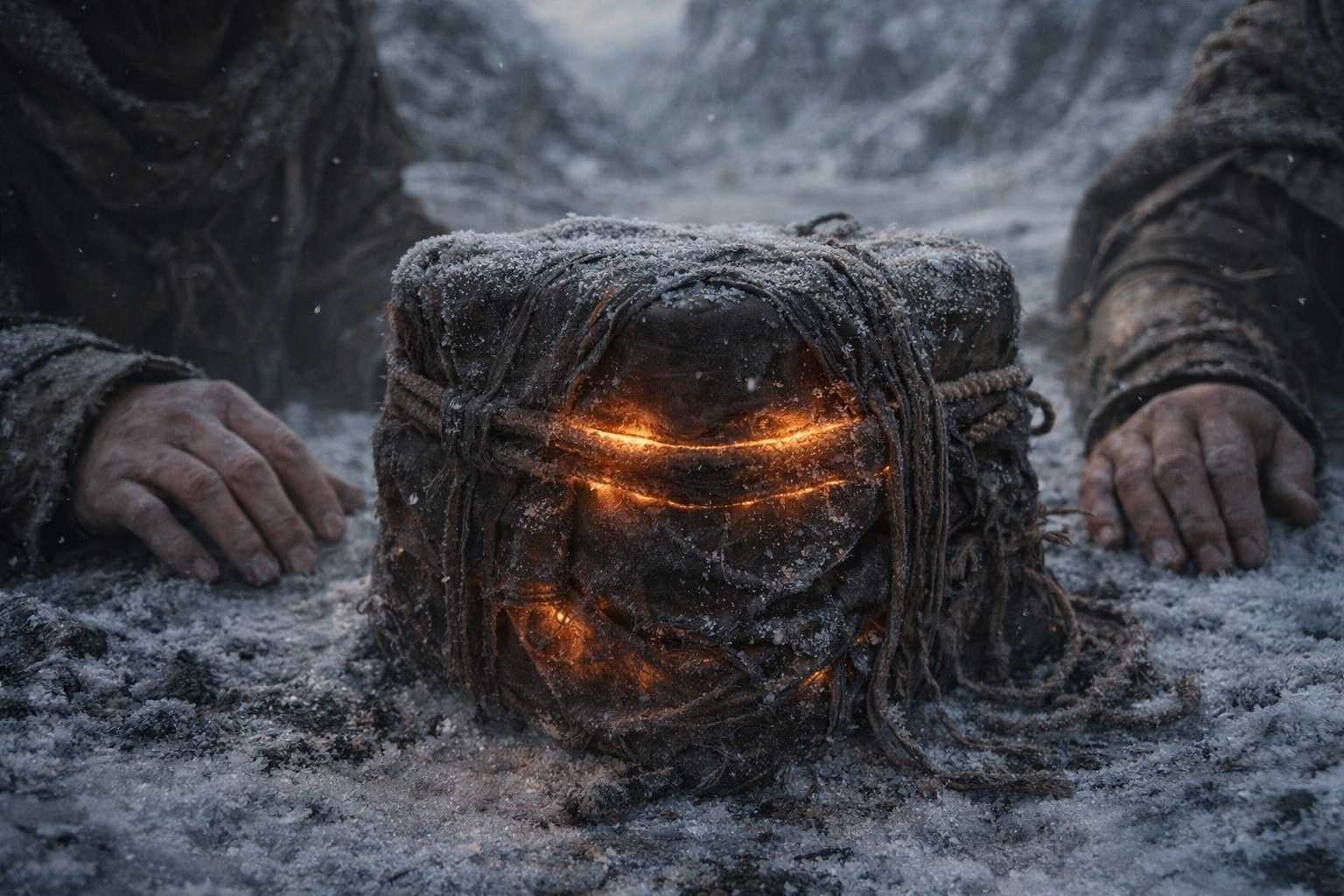
Not broken. Not corrupted.
Wrong timing. The mechanism doing what it was built to do, at a moment when doing it would tear the barrier open instead of sealing it shut.
“How long?” Dulint asked.
Xandor looked at the fragments on the stone. The answers were all there, compiled from three libraries and two visions and a thousand leagues of walking northeast. Every piece pointed in the same direction. Every piece said the same thing.
“I don’t know. Days. Weeks. The acceleration makes prediction unreliable.” He paused. “But it’s soon. The fragments describe what happens when the window opens at the wrong point in the cycle. ‘Breach, not renewal. Opening, not sealing. Everything the barrier contains becomes briefly, catastrophically visible.‘”
Briefly. Catastrophically.
Maris closed her eyes. The pull in her chest tightened. On the other side of the barrier, impossibly far and impossibly close, a dark elf was walking toward a mechanism he was built to operate, carrying the piece that made it work, and the timing was wrong, and the people who knew the timing was wrong were on the wrong side of a boundary they couldn’t cross.
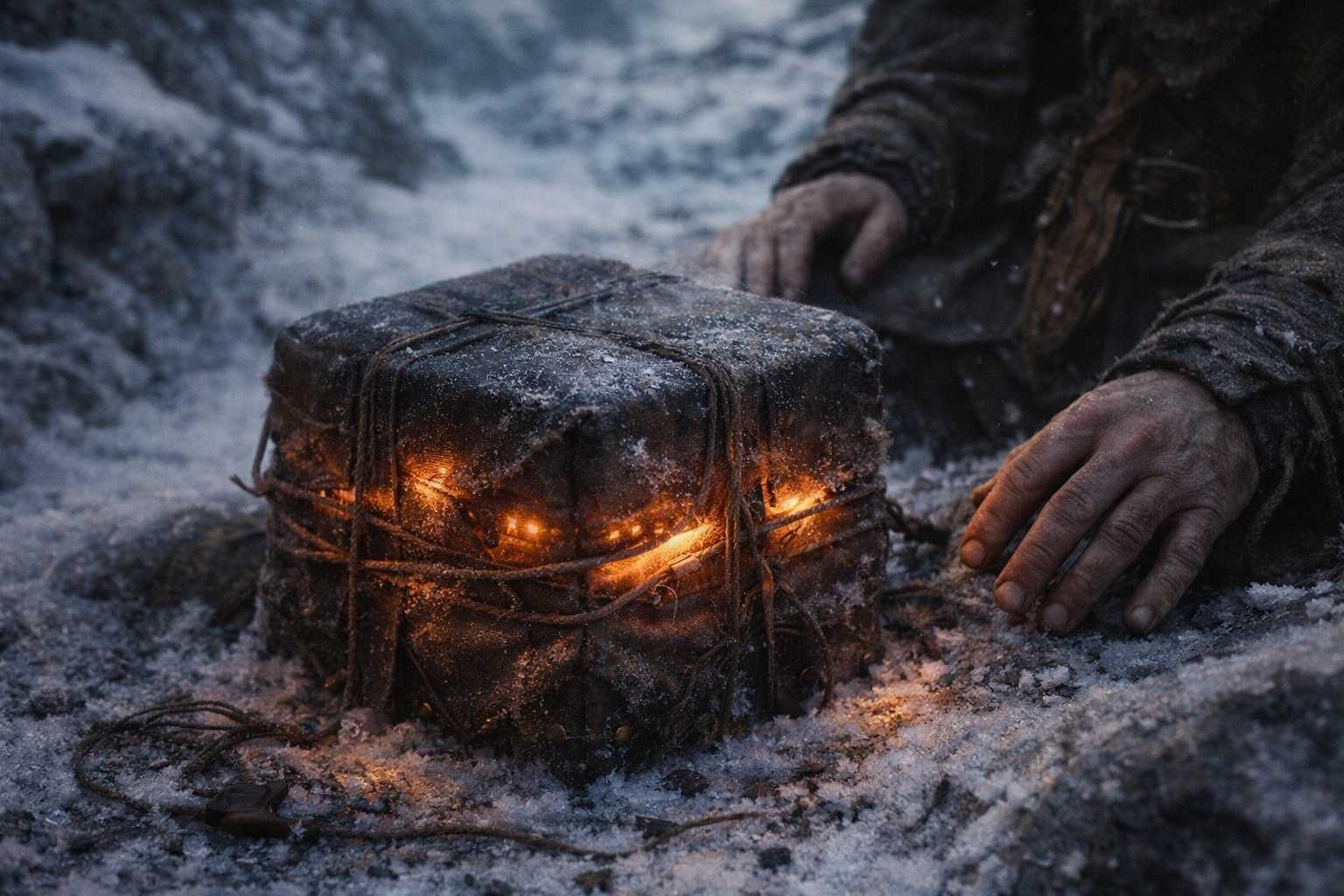
She opened her eyes. The northeast horizon was clear. The Beacon hummed.
“We need to move faster,” she said.
Nobody disagreed.

End of Chapter 35.1 —> 35.2: The Map That Bleeds: The Names
Previous Article
The Price of Answers: The InterruptionNext Article
The Map That Bleeds: The Names

Related Posts

© 2026, All Rights Reserved.
Quick Links
Legal Stuff