


Chapter 11 | Part 4
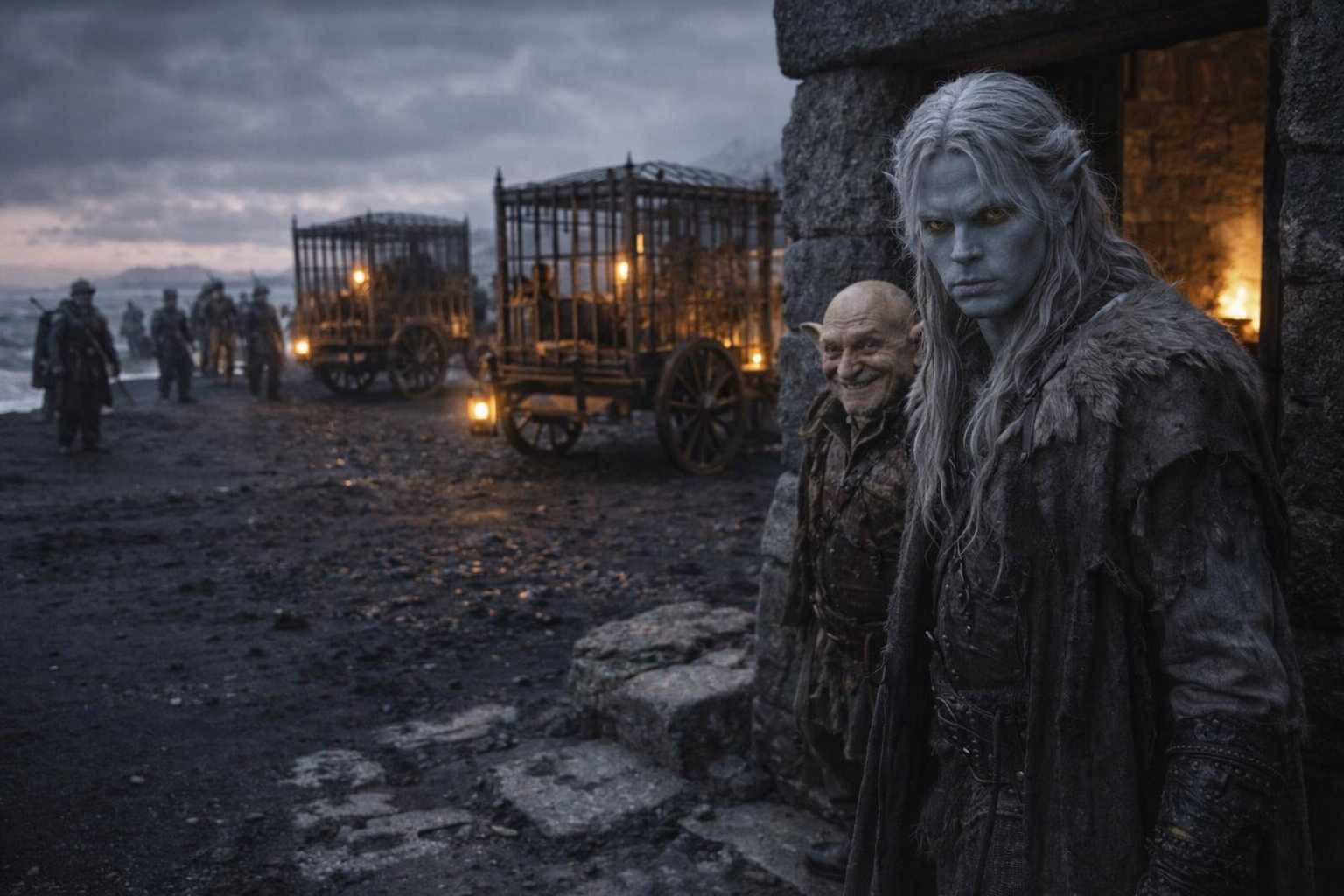
The caravan wasn’t what Drusniel had expected.
Three wagons, heavy-built and reinforced. Guards that moved with military precision. And cages. Iron-barred cages bolted to the wagon beds, some of them occupied.
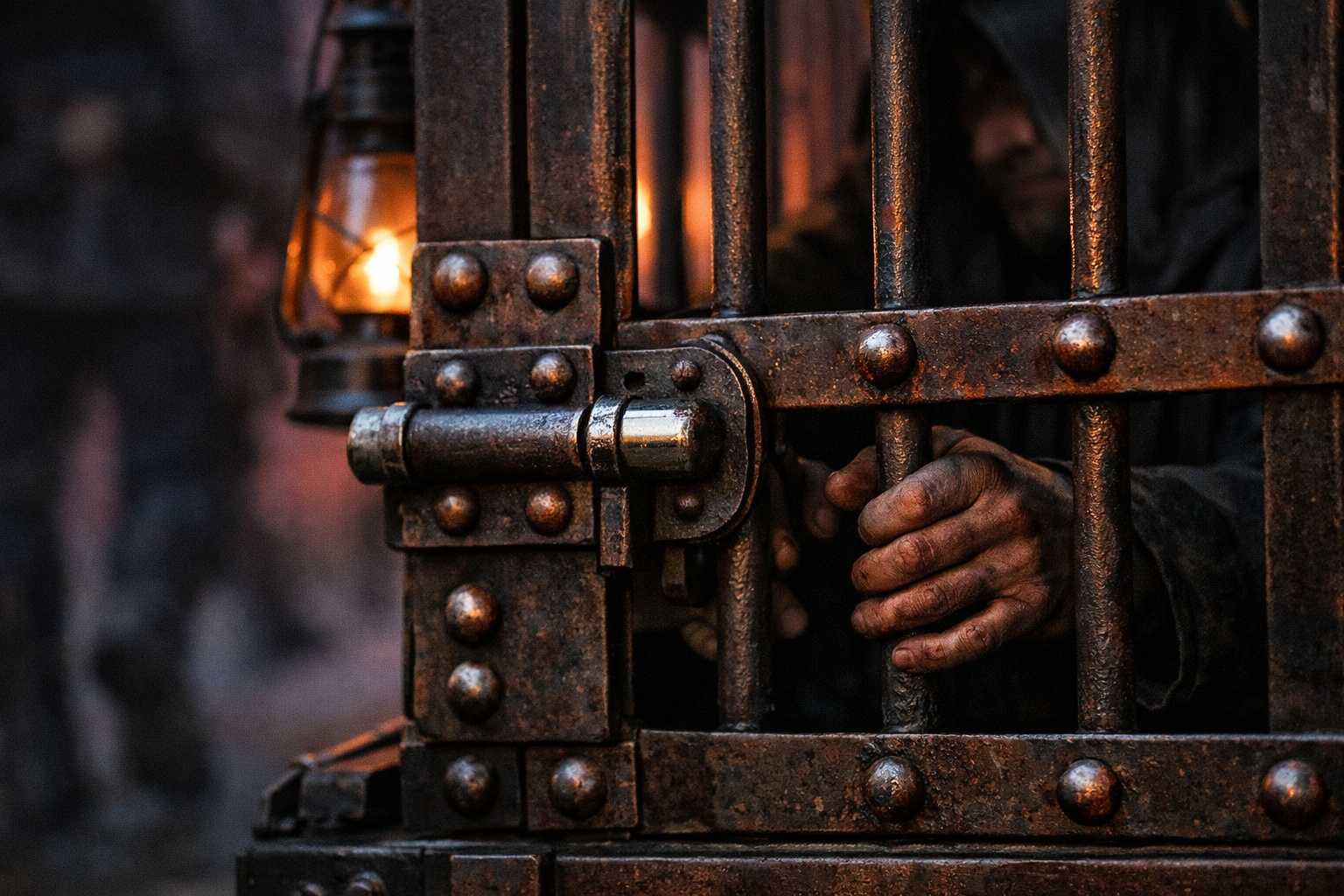
Slavers.
Drusniel understood in that instant—understood with the cold, crystalline clarity of a pattern finally completed. The questions. The delays. The convenient timing. Merrik had never intended to help him reach Szoravel. Merrik had been waiting.
He turned to find Merrik standing behind him, that same easy smile on his face.
“You’re awake,” Merrik said. “I was going to wake you before they arrived, but they made good time.”
“They.” Drusniel’s voice was flat. “The caravan you told me about.”
“The same.” Merrik’s smile didn’t waver. “Though I may have left out some details about its cargo.”
Drusniel’s body was weak, his magic still muted, but his mind was racing. Three wagons. Seven guards that he could see. Merrik standing between him and any escape route. The odds weren’t good.
“You were helping me,” he said. “Why?”
“I was helping you recover.” Merrik shrugged, and the gesture was so casual, so ordinary, that it made the betrayal feel worse. “Healthy cargo sells better. A drow who can barely walk isn’t worth much, but a drow who’s healed, rested, potentially capable of magic?” His smile widened slightly. “That’s valuable.”
Valuable. The word Merrik had used again and again, always framed as observation rather than intention. Drusniel should have heard it for what it was.
“You never lied to me,” he realized.
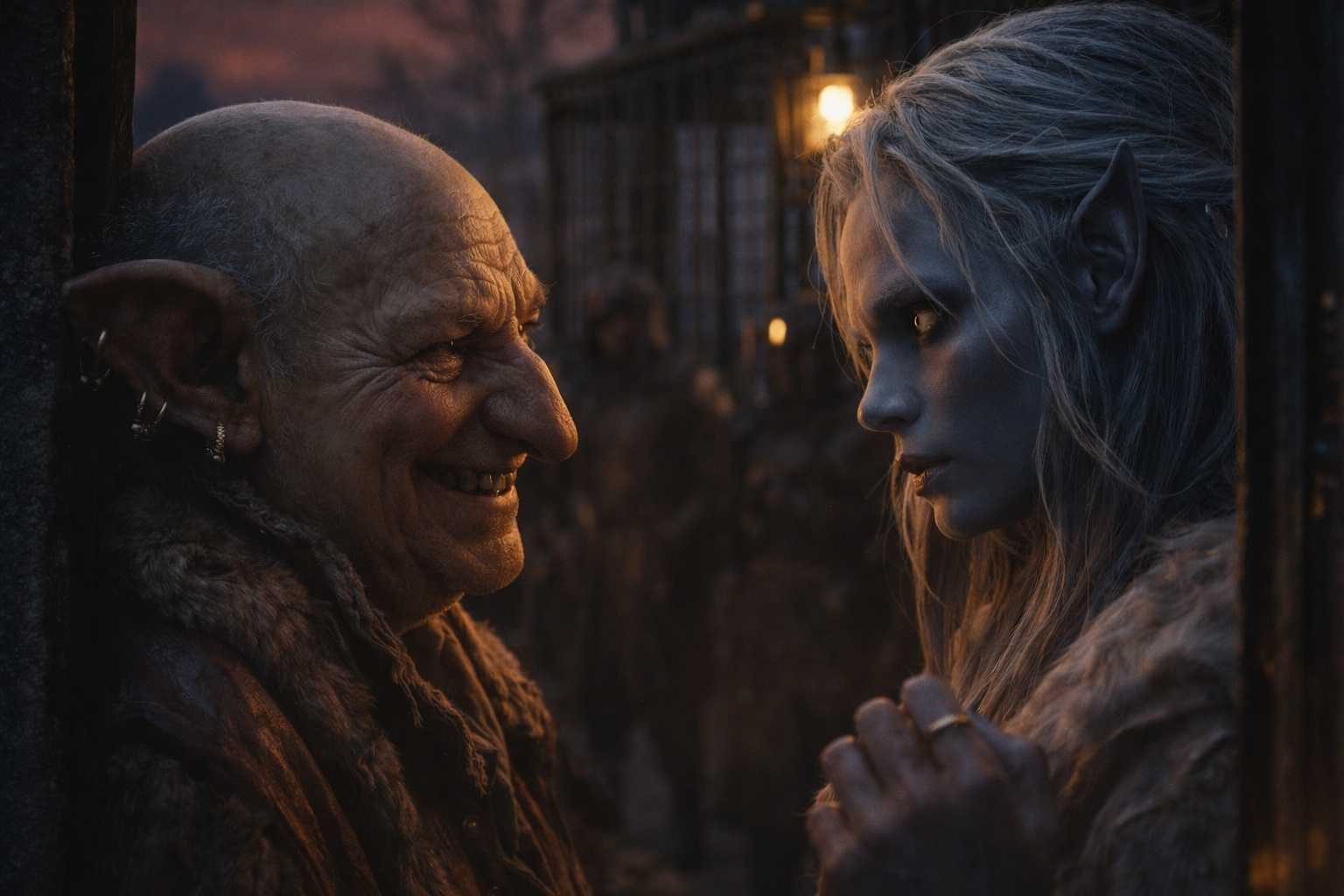
“I never had to.” Merrik stepped closer, and his posture was relaxed, unthreatening. A man with all the leverage he needed. “You asked questions, I answered them. You needed rest, I provided it. Everything I did was exactly what I said it was—helping a crossing survivor recover.” He paused. “The purpose of that recovery was the only thing I didn’t mention.”
The guards were spreading out now, surrounding the small house with practiced efficiency. Drusniel counted them again—seven, plus Merrik. Eight against one, and the one was barely functional.
“I could fight,” he said. “My magic—”
“Is depleted. I’ve watched you try to use it for the past five days. The flicker when you tried to warm your hands. The reaching when you thought I wasn’t looking.” Merrik shook his head. “Whatever you burned getting across that sea, it hasn’t grown back. And even if it had…” He gestured toward the guards. “They’re experienced. They’ve handled mages before.”
Drusniel counted without meaning to. Even at full strength, eight trained opponents would be difficult. In his current state, it was impossible.
“So I’m merchandise now.”
“You’ve been merchandise since I found you on that beach.” Merrik’s voice was almost gentle. “The only question was whether you’d be living merchandise or a body to be stripped for parts. I chose the option where you stay alive.”
“How generous.”
“More generous than you realize. The coast scavengers who came before me—they weren’t so discriminating. A drow corpse has value too. Organs, blood, parts that magic workers will pay for.” Merrik met his eyes without flinching. “I gave you five days of food, shelter, and the chance to live. In Wyrmreach, that counts as kindness.”
Drusniel wanted to argue. Wanted to rage. But looking at Merrik—really seeing him for the first time—he understood something that made the anger curdle into cold certainty.
Merrik wasn’t a villain. Merrik was a pragmatist operating in a system that rewarded pragmatism. He had calculated Drusniel’s value, invested in increasing that value, and was now collecting his return. There was no malice in it. Just economics.
The understanding didn’t make it hurt less.
“The caravan arrives tomorrow,” Merrik had said. But the caravan was here now, early, because Drusniel had asked to leave. One more calculation. One more adjustment.
“You sent word last night,” Drusniel said. “When I asked to leave early.”
“Messengers move fast when they’re properly motivated.” Merrik stepped back, making room for the guards to approach. “I wasn’t sure if you’d noticed the patterns. Most survivors are too grateful to think clearly. But you kept counting—I could see it in your eyes. Counting questions. Counting delays.” He almost sounded impressed. “When you asked to leave early, I knew you’d figured something out. Not the specifics, maybe, but enough to be a problem.”
The guards were close now. Drusniel could see their faces—bored, professional, experienced. Men who had done this many times before.
“The cage on the second wagon,” Merrik said to the lead guard. “He’s weak but stable. Make sure he eats—the eastern markets pay premium for healthy stock.”
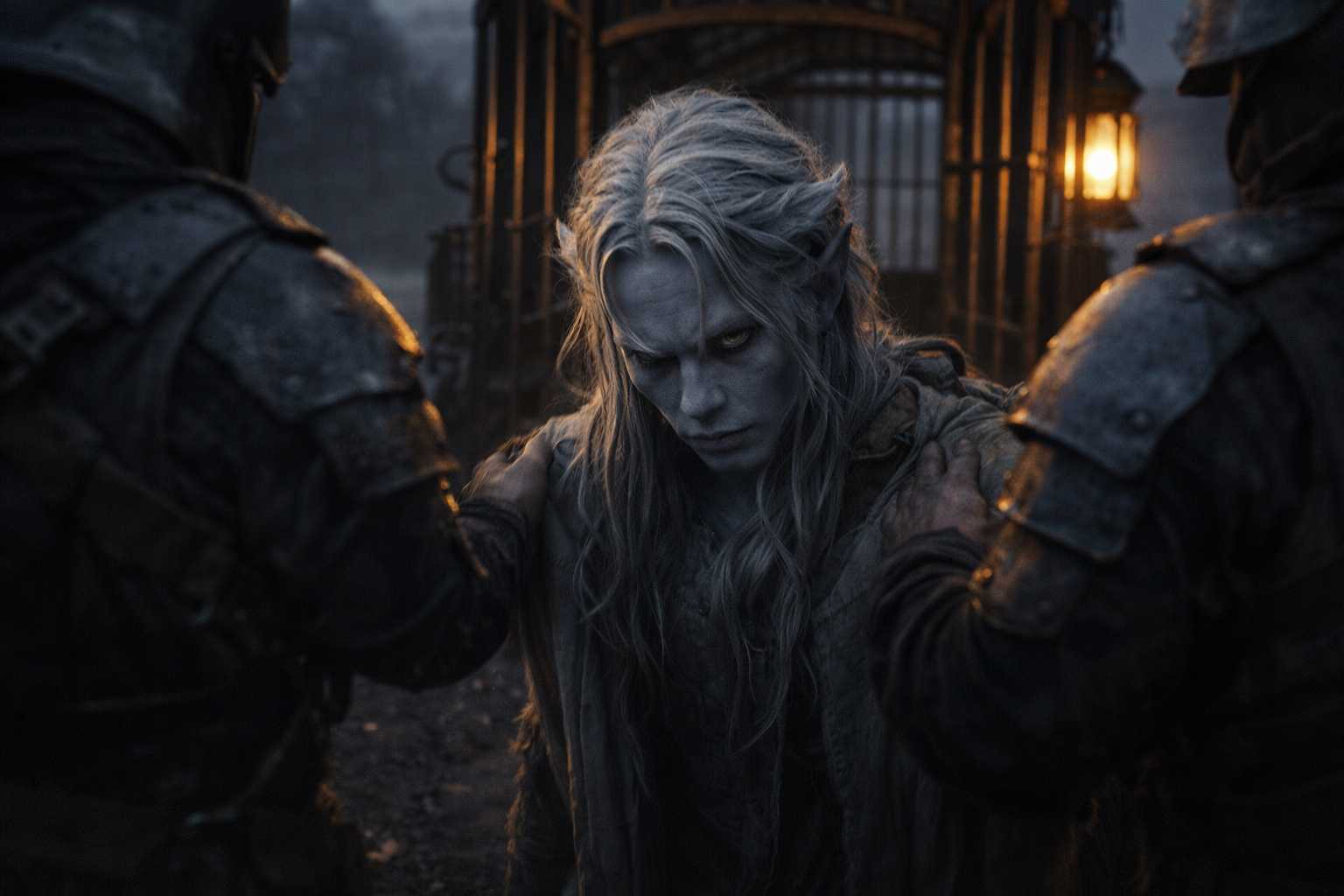
Stock. Not a person. Merchandise.
Drusniel let them take him. There was nothing else to do. He went into the cage without fighting, without protesting, saving what little energy he had for whatever came next.
As the wagon began to move, he looked back at Merrik’s house—the stone walls that had felt like safety, the hearth that had seemed like kindness. From this distance, he could see it for what it was: a trap dressed as a haven.
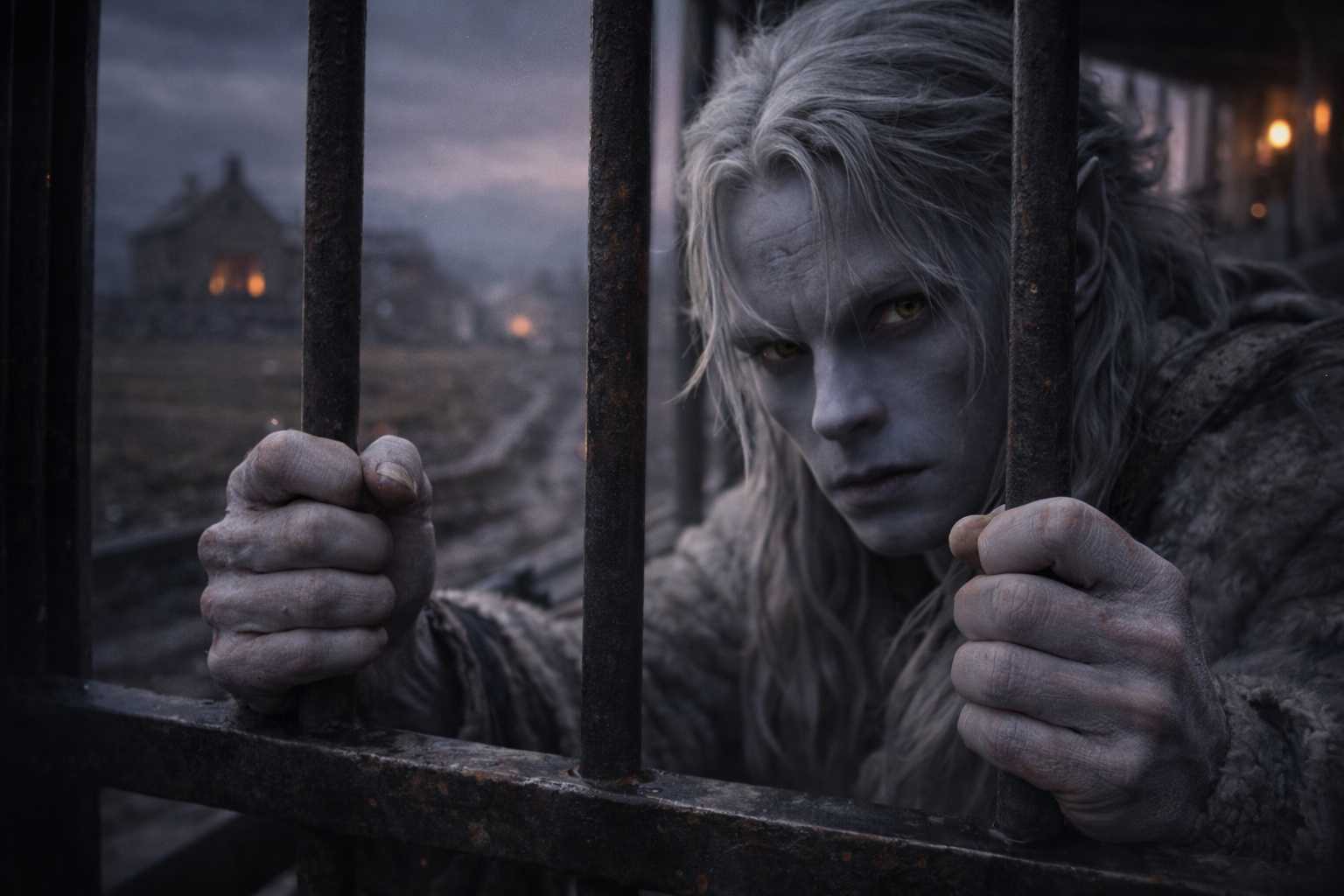
Merrik had never lied. Every word had been true. The betrayal was built not from deception but from assumption—Drusniel’s assumption that help offered freely was help without cost.
He had eleven days’ worth of questions catalogued in his mind, and none of them had been the right one to ask.
The caravan rolled east, toward territory controlled by lords Drusniel didn’t know, toward a fate he couldn’t predict. In his chest, the debt waited—silent, patient, a favor owed to something vast that had saved him only to see him caged.
The arithmetic of his survival had just gotten more complicated.
End of Chapter 11.4 —> 12.1: The Grass Where She Fell: The Aftermath
Previous Article
The Kind Man: The QuestionsNext Article
The Grass Where She Fell: The Aftermath

Related Posts

© 2026, All Rights Reserved.
Quick Links
Legal Stuff