


Chapter 6 | Part 5
Shyntara
The rubble blocked the corridor completely.
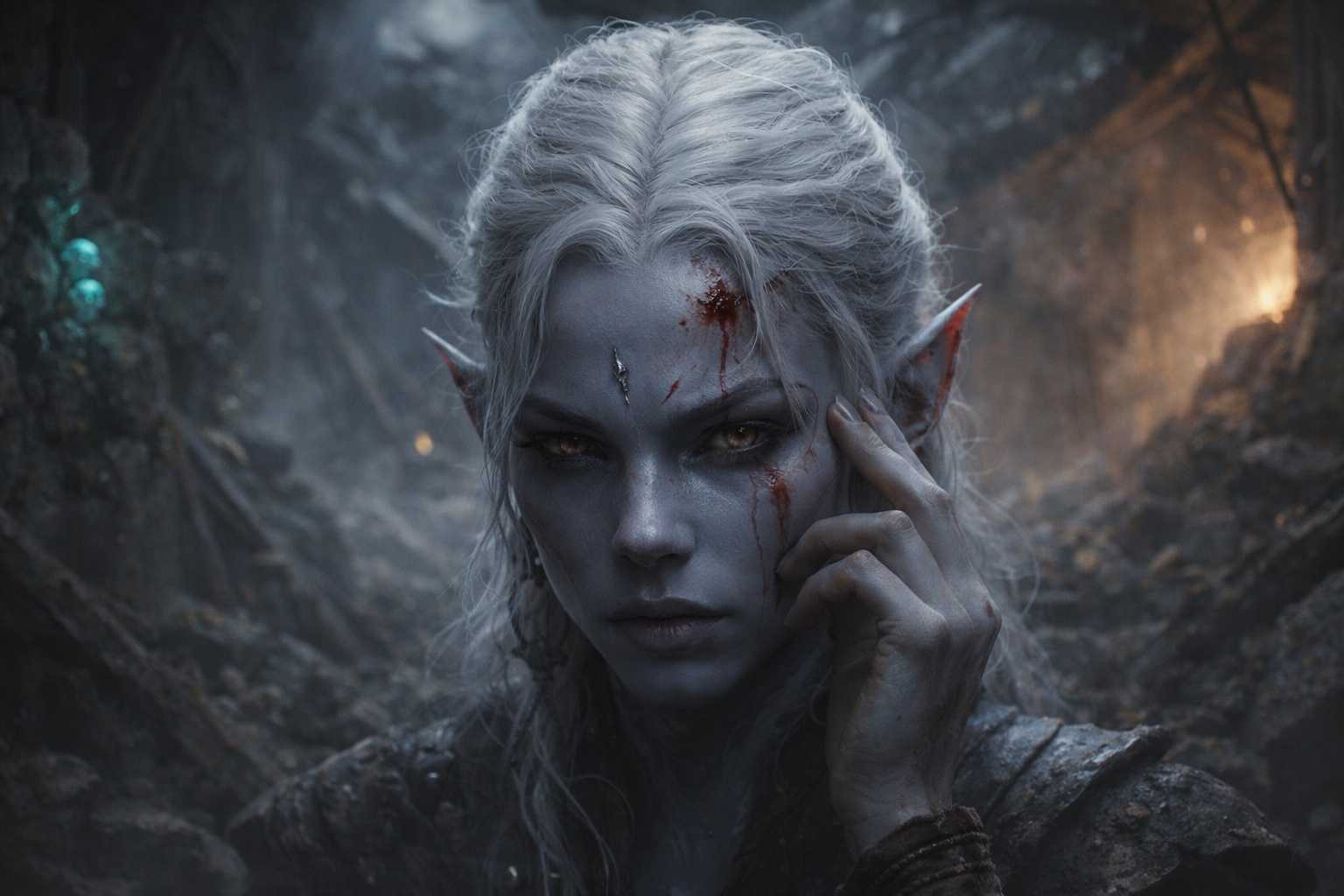
Shyntara stared at the collapsed ceiling, blood running from a cut above her eye, and made calculations. Time to clear a path: too long. Alternative routes: compromised or unknown. Drusniel: on the other side, direction uncertain.
Dead or escaped.
She couldn’t afford to assume the worst. If she assumed the worst, she would freeze. And freezing meant dying. Their father had taught her that before she was old enough to understand what it meant.
Move. Assess. Adapt. Survive.
She turned and moved deeper into the compound.
The attackers were everywhere. She’d killed three of them already—quick, efficient strikes from the shadows, the training their father had drilled into her since childhood. Blade across the throat from behind. Thrust between the armor plates. The anatomy of death, learned like another language.
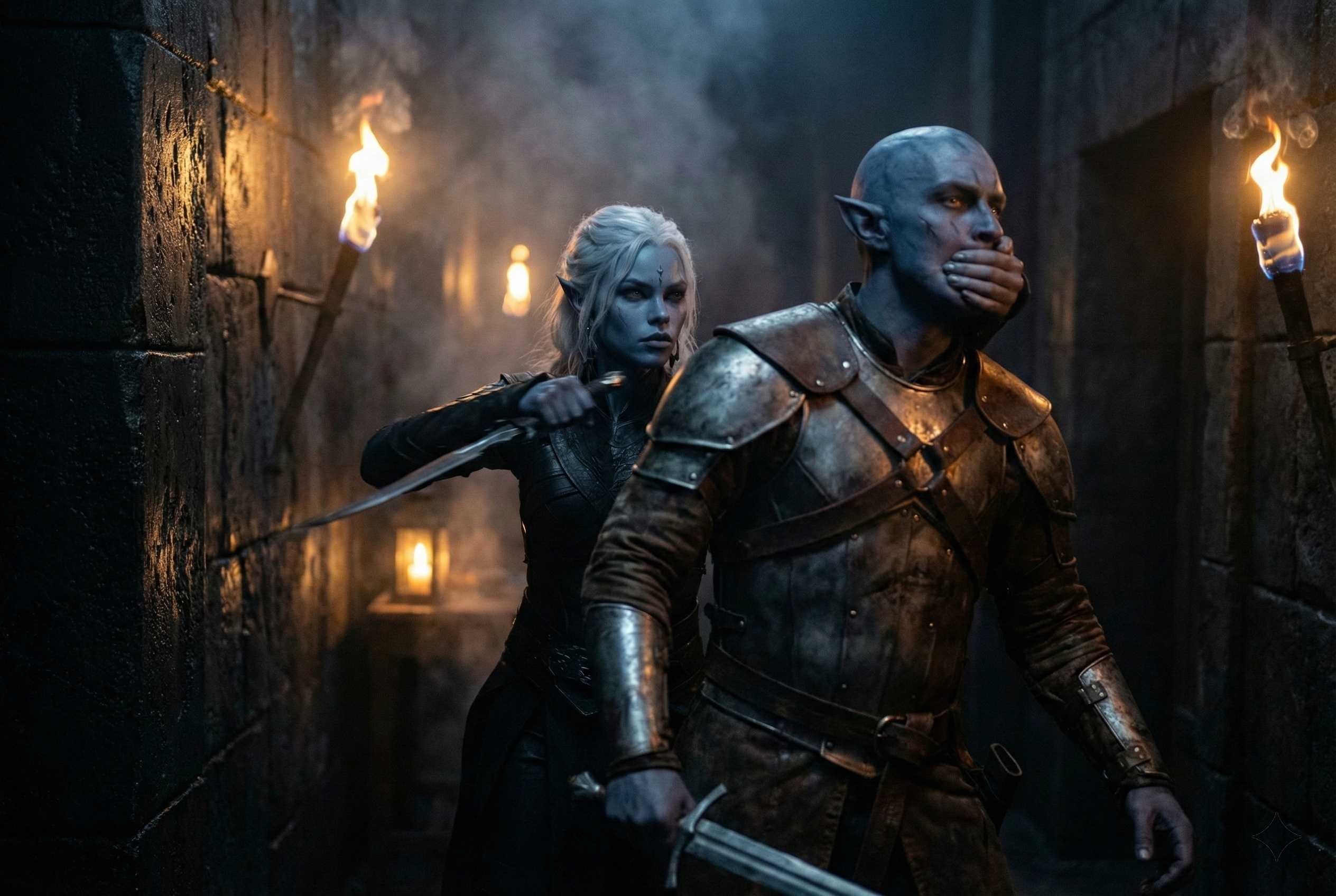
But there were too many. No matter how skilled she was, numbers told. And these weren’t house retainers or hired street fighters. These were professionals.
This isn’t a house raid.
The thought crystallized as she watched a squad of attackers sweep through the servants’ wing. Four of them, moving in perfect coordination. Covering angles. Checking corners. The kind of efficiency that took years of training together.
House Vrinn had assassins—every major house did—but they fought with recognizable patterns. Signature moves passed down through generations. A Vrinn killer had tells. The way they favored their left side. The flourish before a strike that was as much tradition as technique.
These fighters had none of that. No flourishes. No tells. No personality.
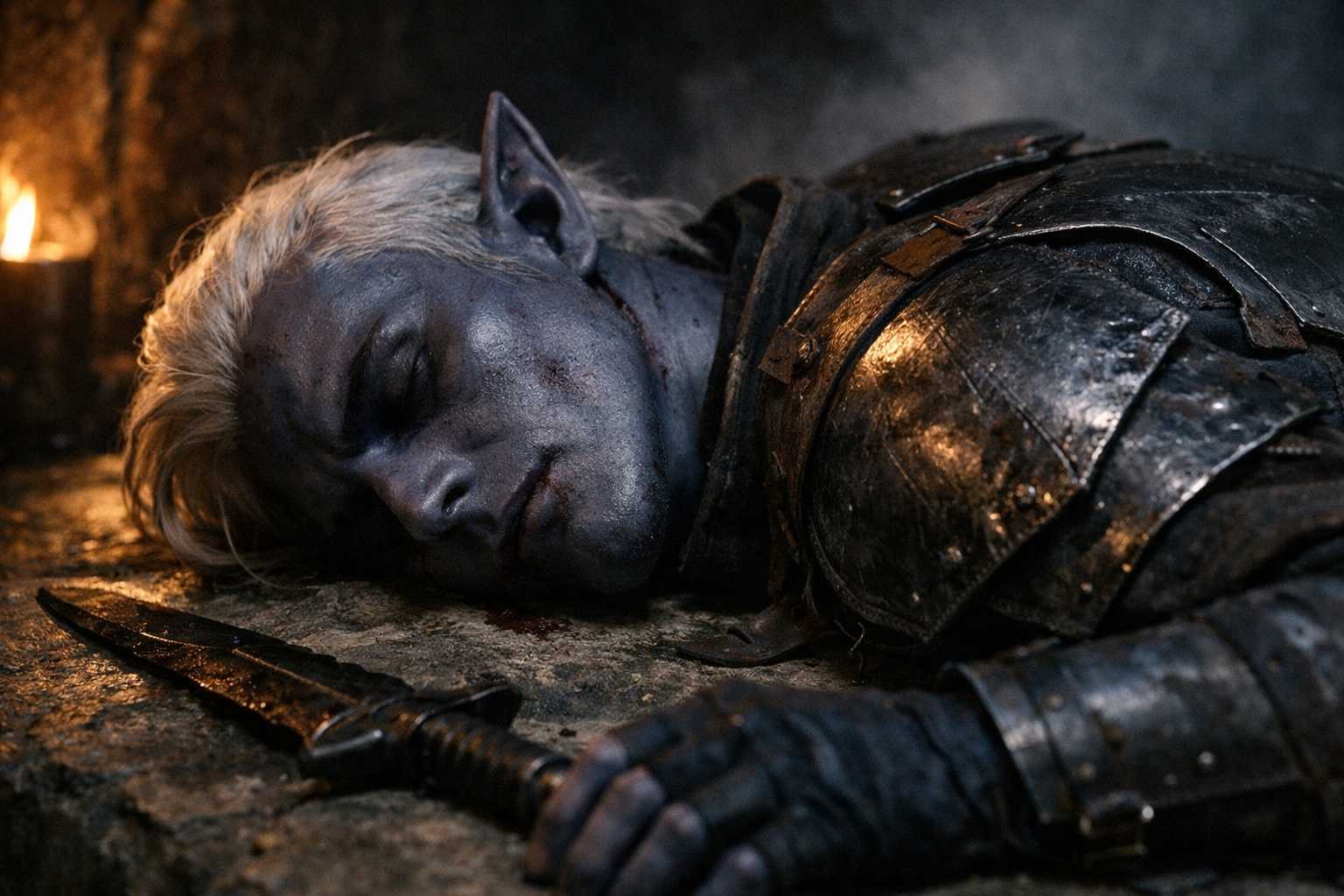
Mercenaries.
Professional soldiers-for-hire, brought in from outside Umbra’kor. Surface dwellers, maybe, or outcasts from a dozen different houses. The kind of force you assembled when you wanted the job done without your own people’s fingerprints.
But why would Vrinn use mercenaries? They had their own killers. Their own traditions. Using outsiders was expensive and risky—harder to control, harder to silence afterward. It went against everything drow houses valued about assassination: the personal touch, the generational grudge, the honor in doing the work yourself.
Unless something about this evidence was being shaped. Directed.
The thought was cold and sharp. Shyntara filed it away for later. Right now, survival came first.
She slipped through a hidden passage—one of the emergency routes only family knew—and emerged in the outer gardens. The compound burned behind her. Smoke rose into the cavern ceiling, spreading like infection through the still air.

Mother. Father.
She’d seen their bodies. Had to step over her mother’s corpse to reach this passage. The image would live behind her eyes forever—her mother’s face, so still, so unlike the woman who had raised her.
There was no saving them now.
Drusniel.
Her brother had run toward the main hall. Toward their parents. Toward the worst of the fighting. She’d tried to follow, but the ceiling had collapsed, and by the time she found another route, the attackers had swarmed the area.
He’s not dead. He can’t be dead.
She had no evidence for that belief. Just the desperate refusal to accept a world where she was the only one left.
The tunnel entrance waited ahead—the same passage Drusniel had used to sneak to the surface. She’d tracked him there twice before losing the trail, curious about where her brother was disappearing to. Now it was her only escape route.
The evidence feels wrong.
The certainty grew as she moved. The weapons she’d seen, the insignias scattered so conveniently, the Vrinn daggers that gleamed too bright in the chaos—something about it didn’t fit. Too neat. Too obvious.
Why would Vrinn leave this trail? They’re not stupid.
She didn’t have an answer. Not yet. But the wrongness was real, and she trusted her instincts more than she trusted convenient evidence.
I’ll find the truth.
She would survive. She would escape. She would find somewhere safe—the surface, maybe, or the port cities, or one of the neutral settlements where a skilled assassin could find work.
And then she would find the truth about who really killed her family.
Her parents deserved justice. Real justice, not the convenient lie someone wanted them to believe.
And if Drusniel lived—
She would find him too. Before he did something stupid in the name of revenge.
Shyntara slipped into the tunnel and disappeared into darkness. Behind her, the compound burned. The life she’d known ended.
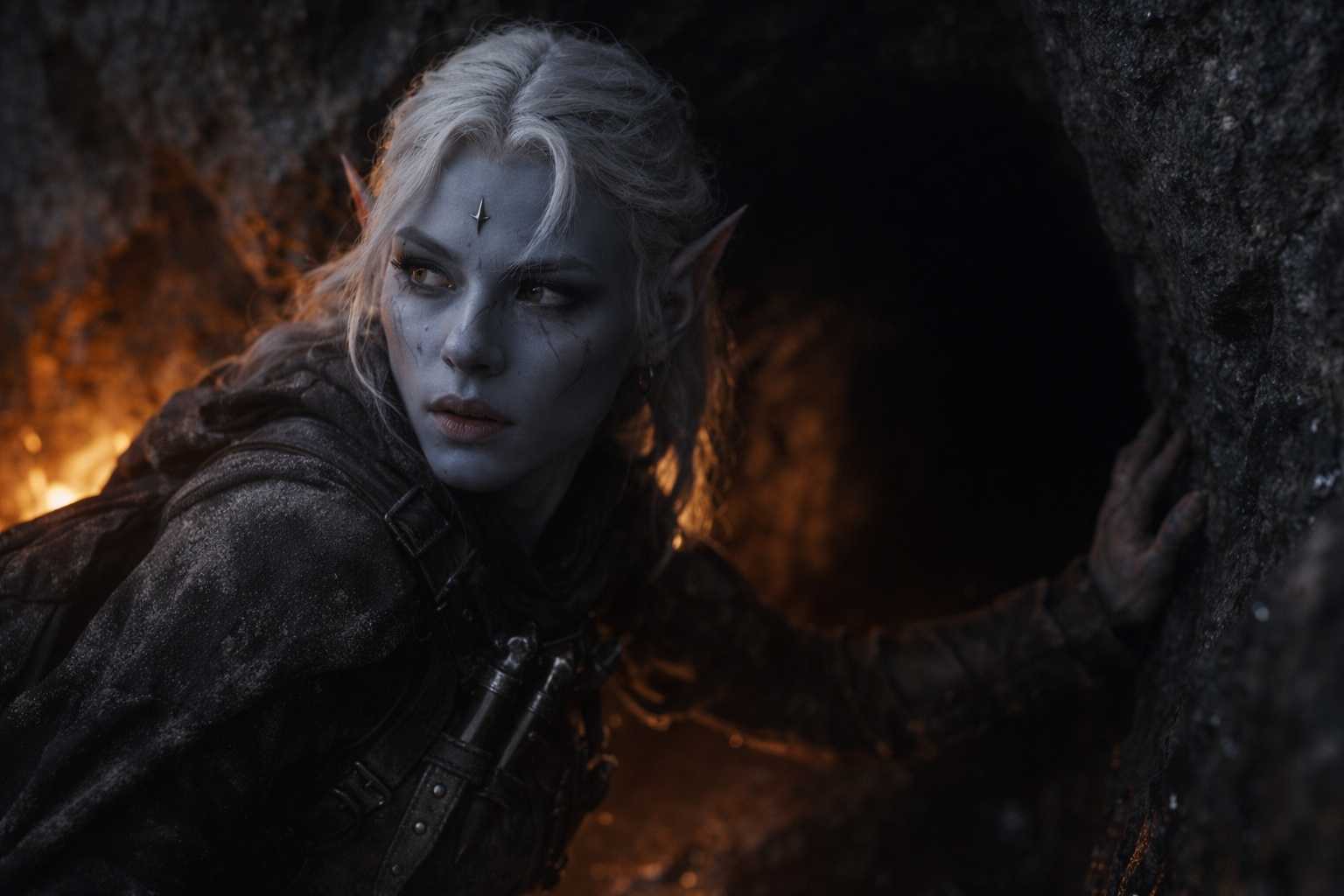
Ahead lay uncertainty. But uncertainty was survivable.
Lies were not.
End of Chapter 6.5 —> 6.6: Blood in the Dark: The Hollow Victory
Previous Article
Blood in the Dark: The EvidenceNext Article
Blood in the Dark: The Hollow Victory

Related Posts

© 2026, All Rights Reserved.
Quick Links
Legal Stuff