


Chapter 44 | Part 3 | The Stillness
He found the edge of the barrier’s interior.
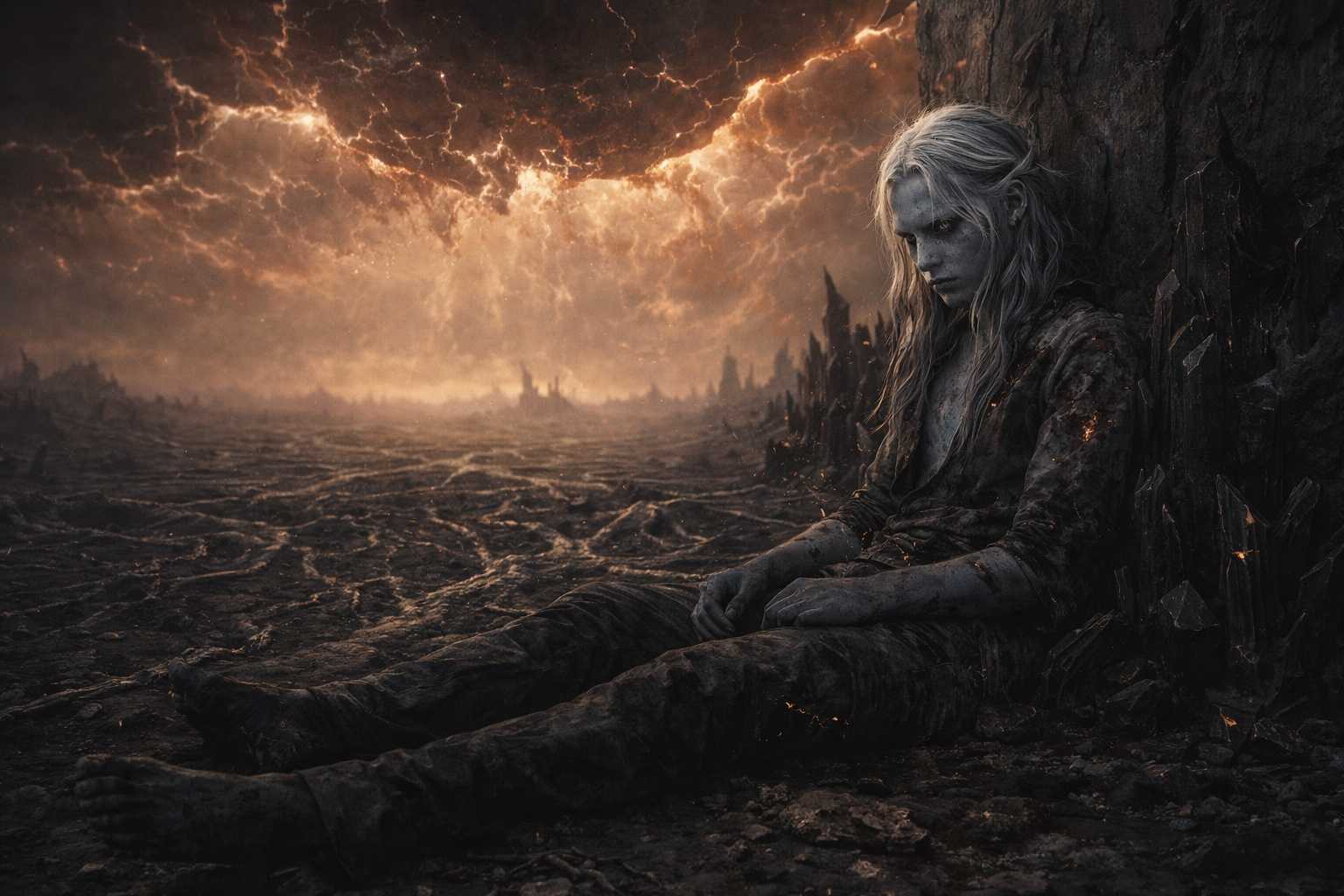
Not the edge of the damage. The damage extended beyond the interior, beyond the dome, beyond the mechanisms that had been built to contain and maintain and protect. The damage was atmospheric, environmental, the kind of change that does not have an edge because it has become the medium everything else moves through. But the interior had a wall, or what remained of a wall, and he walked to it and sat down with his back against it because his legs had carried him as far as they could and his ribs were informing him, with increasing specificity, that the cost of standing was higher than the cost of sitting.
He sat.
The barrier’s wall behind him was cold. The stone had been engineered to regulate temperature as part of the system’s maintenance protocol, and the protocol was no longer operating, so the stone was simply stone, and stone in Wyrmreach was cold. He leaned against it. The cold pressed through his clothing and into his burned skin and the burns responded with a dull flare that settled into a steady ache. The ache was information. He filed it with the other information his body was providing, the ongoing inventory that his mind could not stop running because his mind had been trained to inventory and the training did not respect the fact that the inventory was a list of ruin.
Oxidized amber filled the space above the fractured dome. The color had settled. Not shifting, not deepening, not fading. Settled, the way a permanent condition settles into the thing it has changed. The clouds that moved through it followed patterns that were not wind patterns, the atmospheric contamination creating currents that obeyed rules the old world had not established.
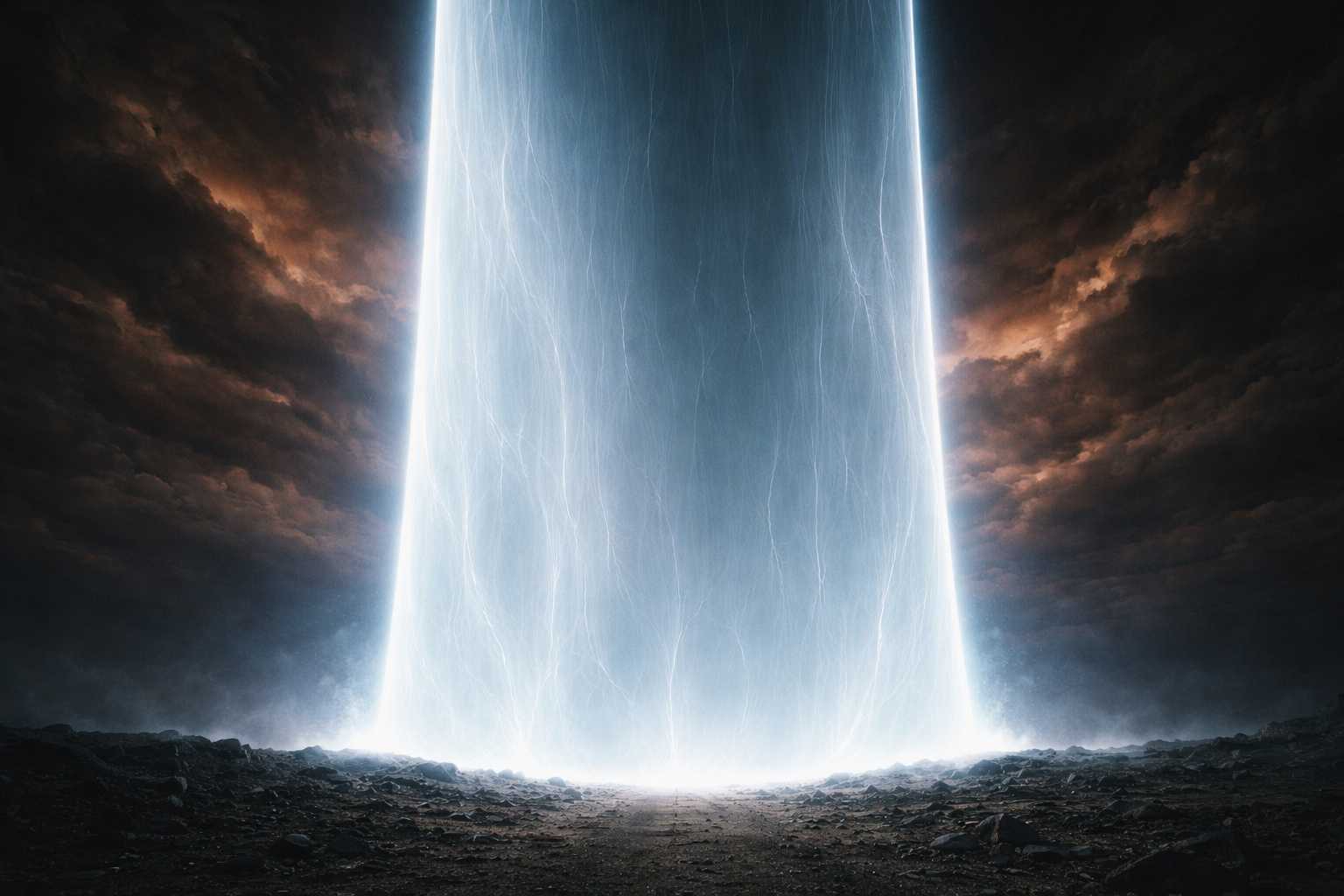
Nyxara did not come.
He had not expected her to. The expectation was another habit, another groove worn by weeks of her presence, the companion who had flown above him and beside him and whose conversations had been the most honest exchanges of his journey. But Nyxara operated at a scale that did not include this. Dragon Conquest was a plan that measured itself in centuries, and the breach was either a success or a setback in that plan, and either way the plan’s next step would not involve sitting beside a damaged drow in a damaged building while he inventoried his ruin. She had gotten what she needed from the breach, or she had not, and in both cases she had moved to the next operation, and the next operation was at a scale that did not have a drow-sized component.
He wondered if she would have sat with him if the scales were different. If she had been what he had allowed himself to believe she was: a companion, an ally, a person whose understanding of duty and cost matched his own. If the distance between what she was and what he needed had been small enough to bridge. He wondered, and the wondering was useless, and his mind ran it anyway because his mind ran everything.
Srietz was somewhere.
The barrier had rejected him. Gently. Absolutely. The rejection had been the barrier’s protocol for unmatched components, and Srietz had been unmatched, and the protocol had pushed him back with the efficiency of a lock that recognizes the wrong key and returns it. Srietz should be alive. The rejection was not designed to kill. It was designed to redirect, and Srietz was durable in ways that had nothing to do with his body and everything to do with the fact that Srietz did not stop existing because a system told him to.
Elion was with Srietz. Probably. The Sage had screamed when the barrier rejected them, the Sage’s connection to the barrier’s disruption overwhelming the host, and Elion had dropped. But Srietz would have carried him. Srietz would have counted the weight and the distance and the probability and done the thing anyway, because Srietz’s relationship with probability was that probability was someone else’s problem.
They were out there. Beyond the barrier zone. Alive. Damaged. Waiting, or walking, or doing whatever Srietz decided needed doing when the person he had followed into catastrophe did not come back through the door.
He could not check. His magic was gone. The barrier’s communication systems were dark. The distance between where he sat and where they should be was physical distance only, and physical distance required legs, and his legs had made their position on further service clear.
He sat. The wall behind him. The fractured dome above. The dark floor in every direction, the dead veins like a map of a system that no longer existed. The amber-rust light filling the space with the quality of a permanent dusk, neither day nor night, the contaminated atmosphere producing a light that had no time in it.
There was nothing left to catalogue.
The habit reached for numbers and found none. It reached for categories next and found the work already finished: burns, blood, magic gone, the Voice gone, crystals dead, the artifact dead, ribs damaged, companions reduced to uncertainty, purpose reduced to none.
The list was finished. The habit ran the list again. The list was still finished. The habit ran it again.
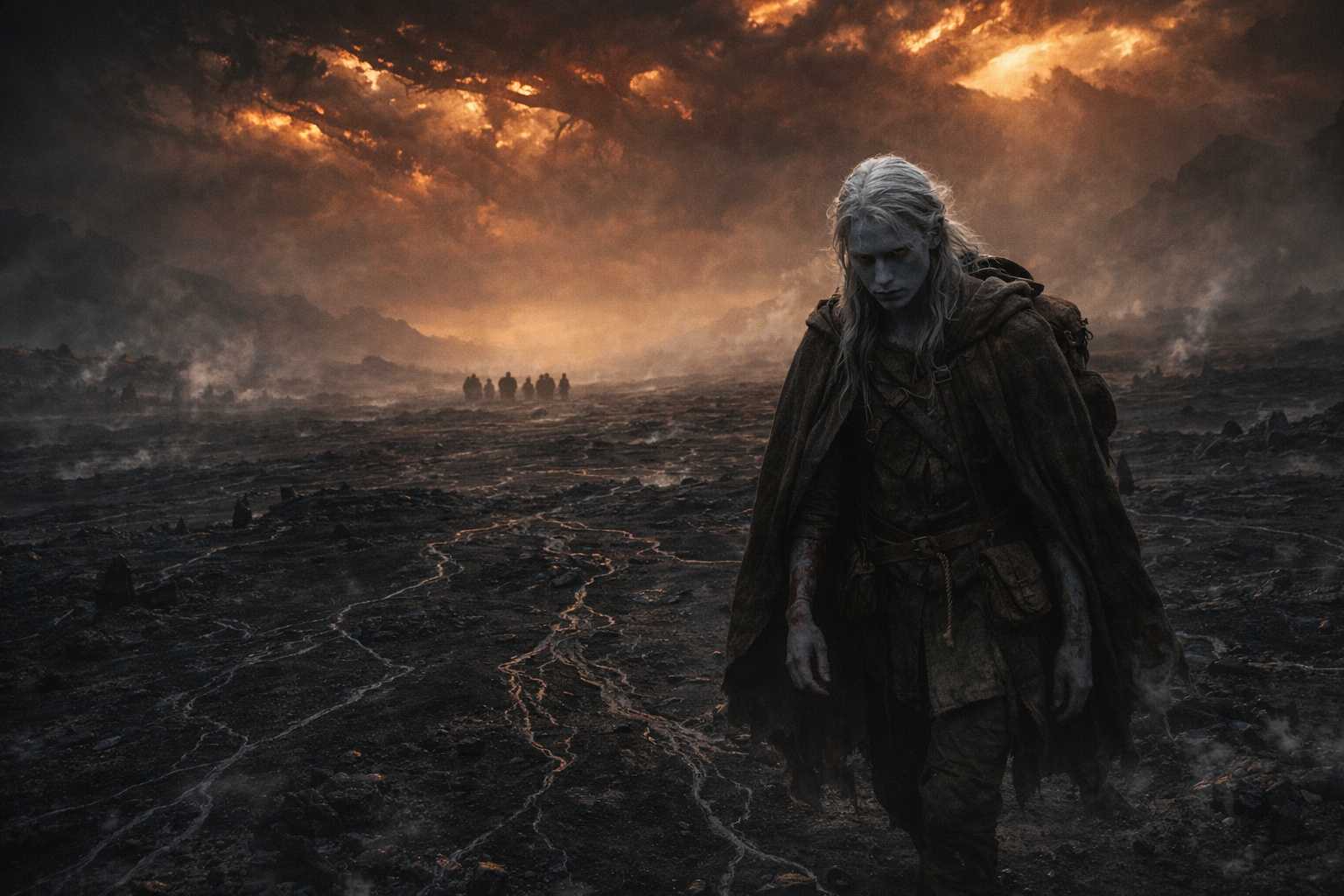
One, two, three, four. His thumb against his thigh. The count that did not catalogue. The count that existed for its own sake, as proof of continuity, as evidence that the person doing the counting was still a person doing the counting. One, two, three, four. The minimum of selfhood. The irreducible action of a mind that refused to stop.
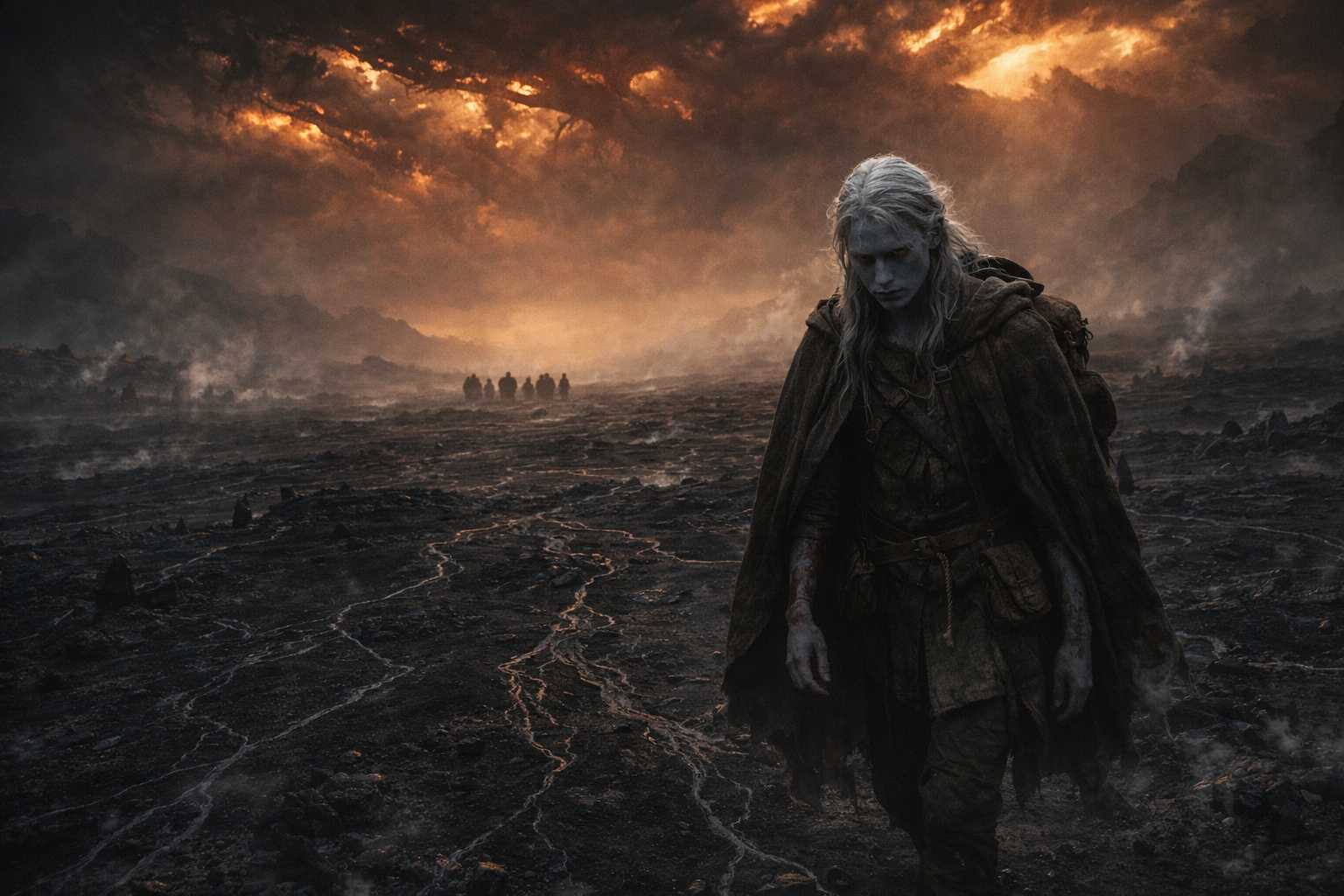
He sat in the ash under a wrong-colored sky, with absolute silence in his head, and that was all there was.
Time passed. He was not sure how much. The settled color overhead did not change in a way that indicated hours. The light remained constant, the permanent dusk of a contaminated atmosphere, and without the cycle of light and dark the passage of time became theoretical. It had been some time since the act. It would be more time before whatever came next. The interval between them was this: sitting, breathing, counting, existing.
He would have to stand. He understood that in the abstract way that he understood everything now, the way a person understands mathematics without being able to move their hands. He would have to walk back through the barrier zone and find out what remained of the world he had broken. He would have to find Srietz and Elion. He would have to face whatever the changed world had become and whatever the changed world required of a person who had changed it.
Someone would ask him why. Eventually, someone would look at the oxidized light above and the destabilized magic and the cracked barrier and ask the person who had stood at the center of it why he had done it. And he would have to answer, and the answer was: because his beliefs told him to. Because the analysis was correct and the timing was wrong and the system did not distinguish between the two. Because every decision he had made had followed the cleanest analysis he could produce, and the timing had still led him here, and here was ash and silence.
But not yet. Not yet.
For now he sat in the ash under a wrong-colored sky, with absolute silence in his head, and the count running in his thumb, and the ribs informing him of their condition, and the burns settling into their permanent ache. For now he existed, which was the minimum a person could do, and even that felt like too much, and even too much was still happening, and the happening was proof of life in a body that had served its function and was now surplus to requirements.
One, two, three, four. The count meant nothing and everything at once. It said the only thing left to say: still here.
Still here.
Nyxara watched the ash settle.
He was no longer a survivor. Survivors were counted after catastrophe. He would be counted before the next one.
Astalor would learn that soon enough.
She turned.
“Move.”
The order carried at once. Let others mistake this for aftermath. The scale had only changed.
End of Chapter 44.3 —> 45.1: The Things That Follow: The Hunters Return
Previous Article
Ash and Silence: The SilenceNext Article
The Things That Follow: The Hunters Return

Related Posts

© 2026, All Rights Reserved.
Quick Links
Legal Stuff