



Chapter 12 | Part 3
The road to Riverhold was dusty and unremarkable. Farmers passed with empty carts, heading home after market day. A merchant train rumbled by, guards watching Maris with the casual suspicion reserved for lone travelers who looked like they’d been sleeping in fields.
She probably did look terrible. She hadn’t checked.
The vision played again as she walked—boat, water, hand—and she let it run, too exhausted to fight. The headache had settled into a dull roar, constant and familiar. Her bitten tongue had stopped bleeding, though it still throbbed with each heartbeat.
This is real, she told herself. The road is real. The dust is real. The pain is real.
It was a grounding ritual she’d developed over the years. When the visions came, they felt more real than reality—more vivid and present, closer to truth. The only way to come back was to anchor herself in sensation. Pain worked best. It was why she bit her tongue.

The merchants are real. The sun is real. I am walking toward Riverhold, and I am awake.
But was she? The visions sometimes blurred the line. She’d had episodes where she’d walked for leagues in a trance, eyes open but seeing something else entirely. She’d had conversations she didn’t remember, made promises she couldn’t recall, agreed to things that seemed insane when she finally surfaced.
Am I awake now?
The question felt important. The stable image felt important. Everything felt sharp-edged and significant, like the universe was trying to tell her something and she was too thick to understand.
Riverhold’s gates appeared ahead. Guards stood at attention, checking travelers, collecting the small tolls that funded the town’s walls. Maris joined the queue, grateful for something mundane to focus on.
When her turn came, the guard looked her over with tired eyes. “Name?”
“Maris Hale.”
“Business in Riverhold?”
“Trade.” The lie came easily. Better than explaining that a vision had dragged her here against her will.
“How long?”
“A day or two. Maybe longer.”
The guard grunted and waved her through. She passed under the gate’s shadow and into Riverhold proper.
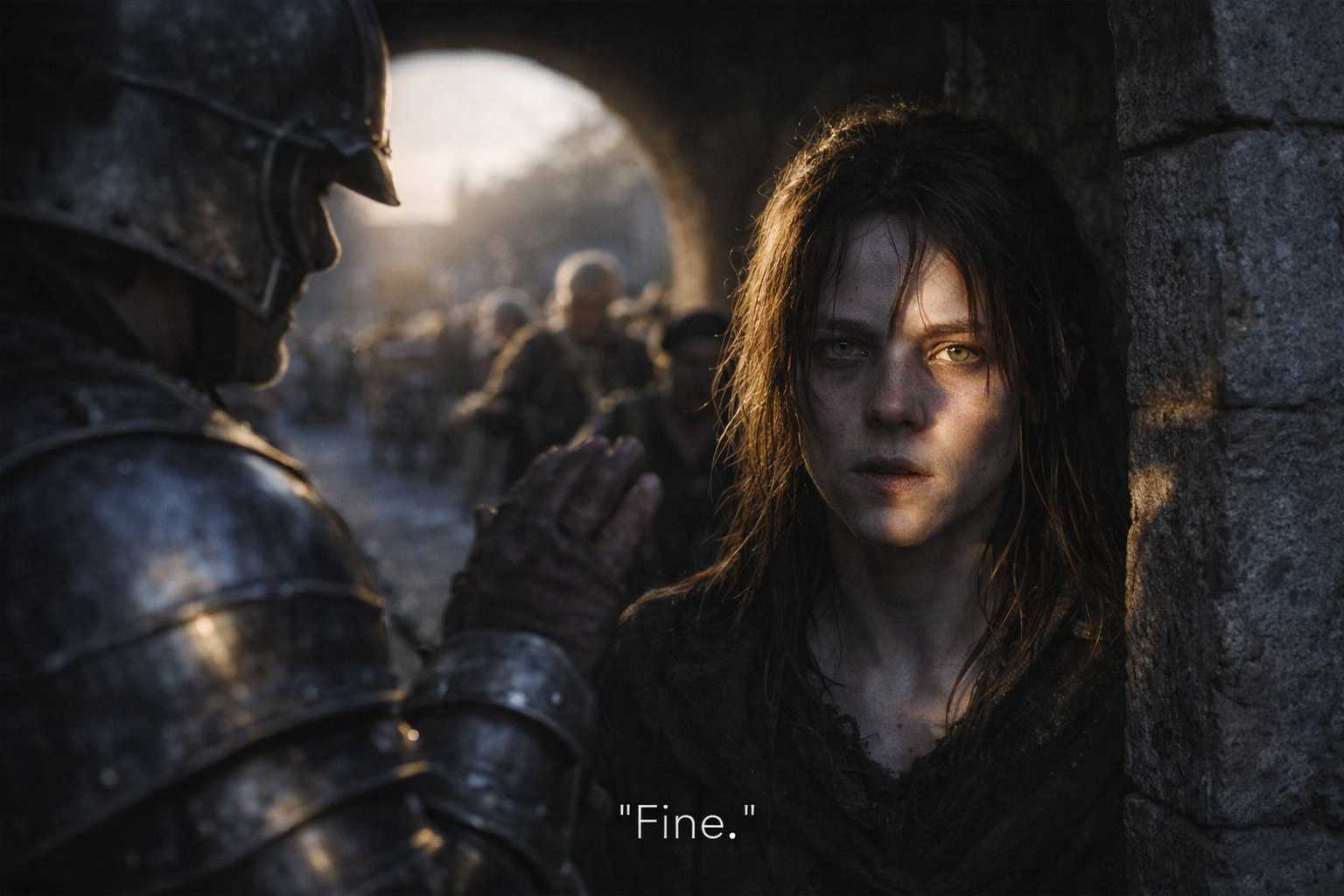
The town was busy but not crowded. Shops lined the main street, their signs swinging in the evening breeze. An inn dominated one corner, its windows glowing with warm light. People moved with purpose, finishing the day’s work before darkness fell.
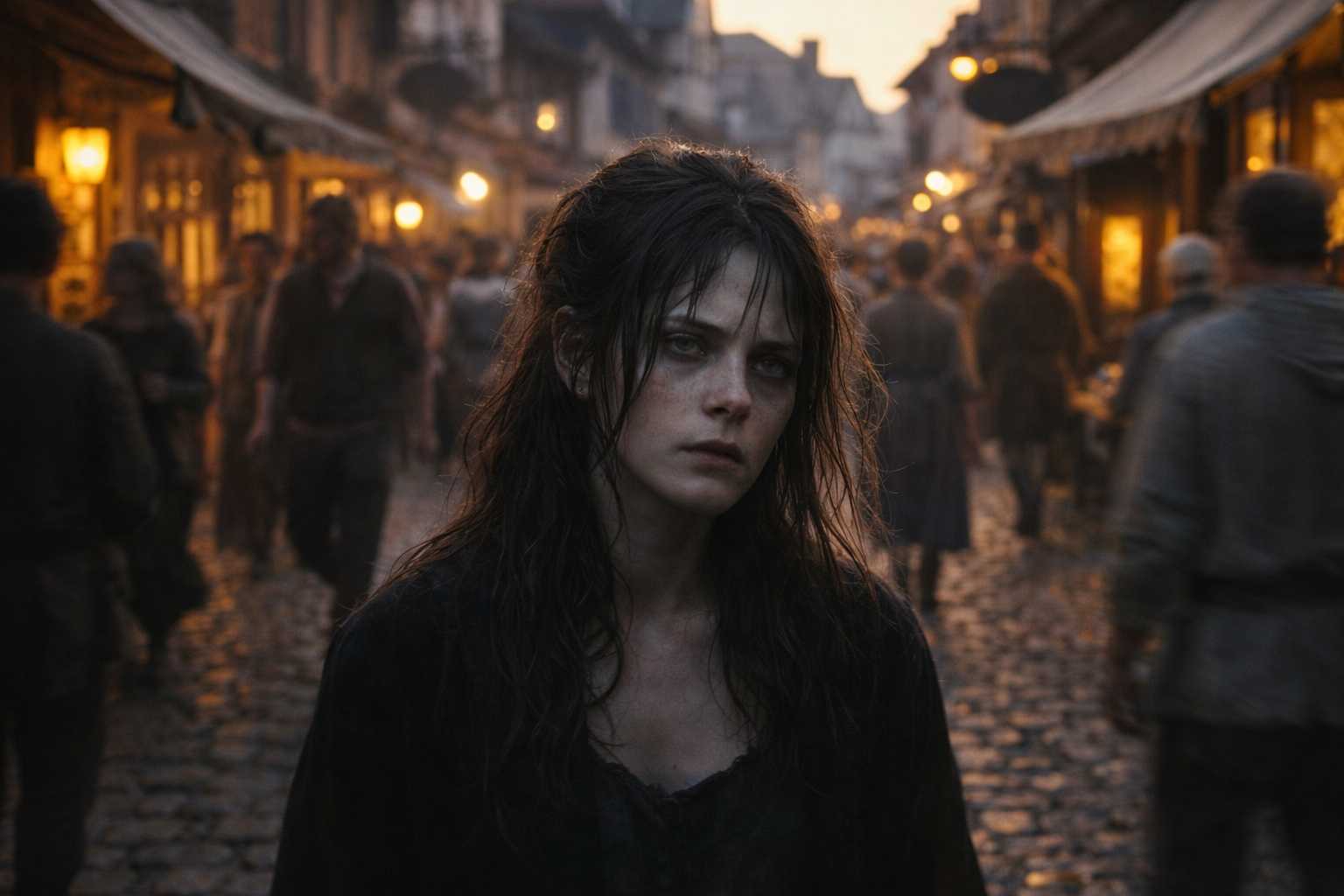
None of them knew. None of them saw the boat, the water, the hand. None of them felt the pull in their chest, insistent and demanding.
Maybe I am mad, Maris thought. It wasn’t a new consideration. The line between prophecy and madness was thin, and she’d never been entirely sure which side she stood on.
The stable image flickered through her mind again. Grey-dark fingers grasping at nothing. Black water rising to claim them.
This one is different, something whispered in the back of her mind. This one is real.
But they always felt real. That was the problem.
She found a spot against a building’s wall and leaned there, breathing slowly, letting Riverhold’s ordinary sounds wash over her. Market vendors calling the last of their wares. Children laughing somewhere nearby. A dog barking at something only it could see.
The pull in her chest had strengthened since she’d entered the town. It wasn’t pointing toward anything specific yet—just a general sense that something here mattered, that she was in the right place, that if she waited long enough, the path would reveal itself.
She hated that part most of all. The passivity. The waiting for the universe to show her the next step instead of choosing for herself.
But she’d tried ignoring visions. She’d tried running from them, suppressing them, drowning them in drink and distraction. Nothing worked. The visions came regardless, and the longer she ignored them, the worse they got—stronger and more frequent, increasingly demanding.
Better to follow and have it done, she’d learned. Better to see where the path leads than to let it drag you there.
So she waited. Leaned against the wall as the sun sank lower. Watched Riverhold’s people finish their days. And tried not to think about the grey-dark hand slipping beneath the black water, reaching for rescue that wasn’t coming.

I’m going to find out who that is, she realized. I’m going to find out why I keep seeing them drown.
The thought brought no comfort.
End of Chapter 12.3 —> 12.4: The Grass Where She Fell: The Conduit
Previous Article
The Grass Where She Fell: The Stable ImageNext Article
The Grass Where She Fell: The Conduit

Related Posts

© 2026, All Rights Reserved.
Quick Links
Legal Stuff