


Chapter 22 | Part 2
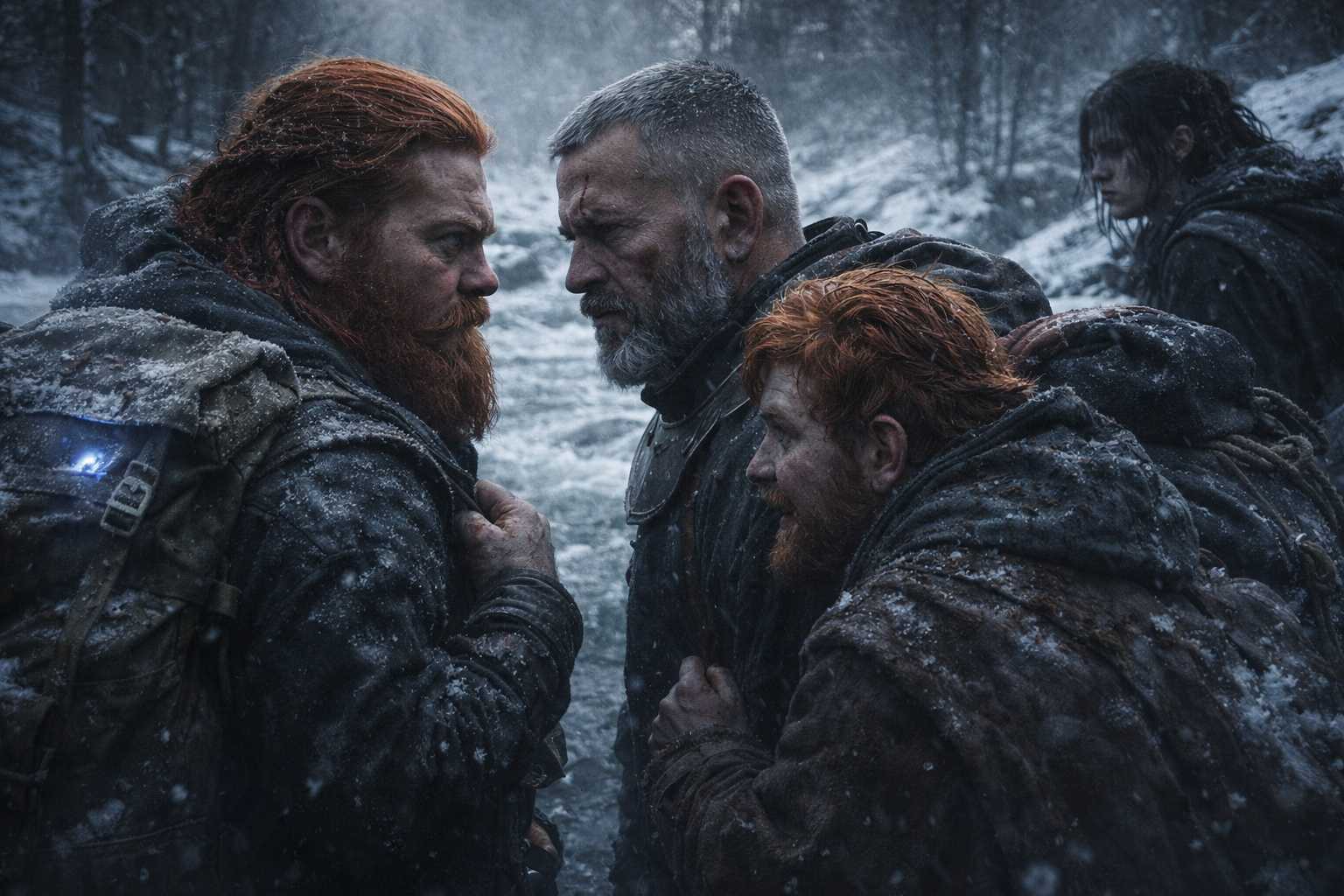
The argument started over a stream crossing.
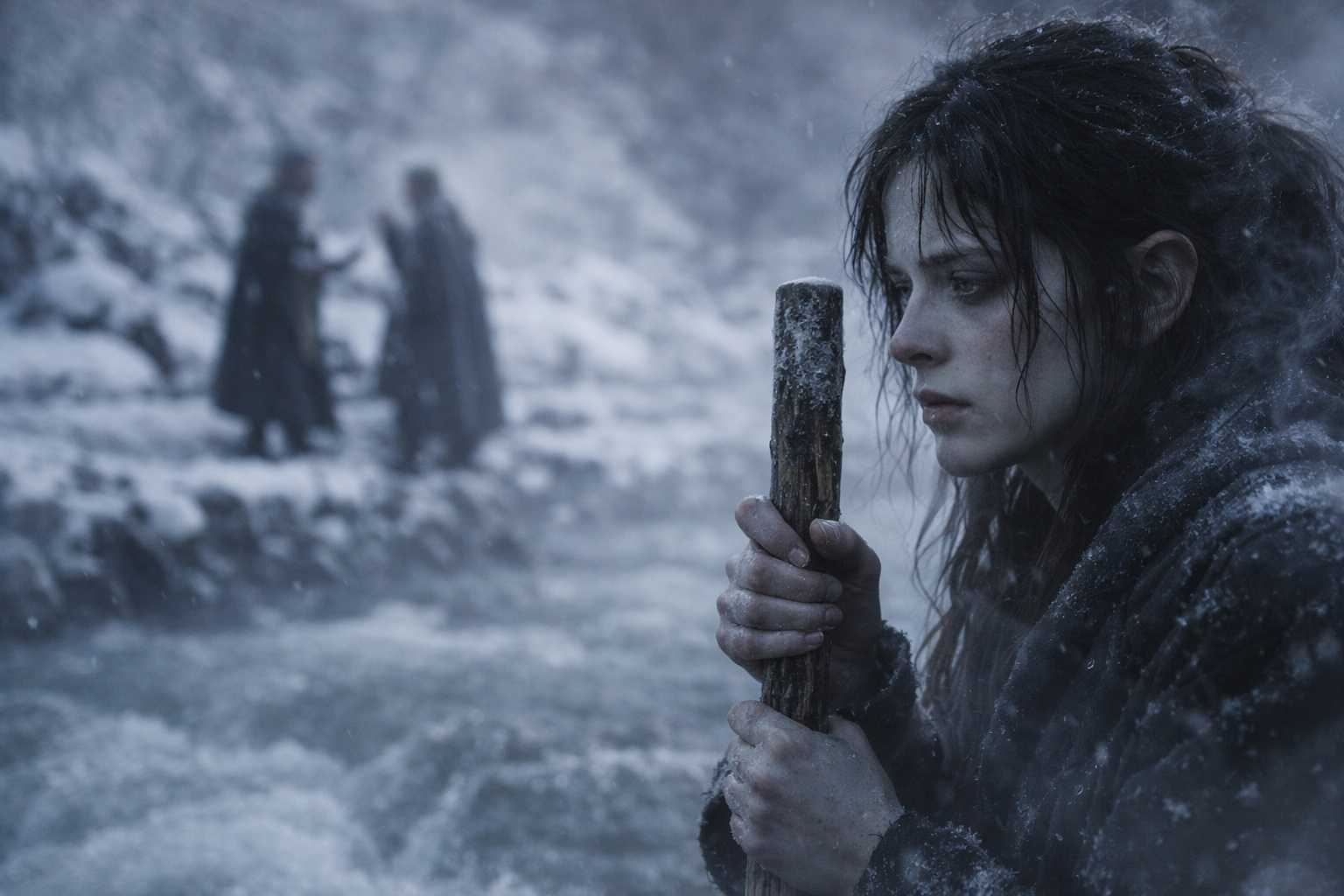
They’d been following the game trail for two days when it intersected a river swollen with snowmelt from the Frostgard passes. Not wide, maybe thirty paces, but fast. The water ran grey-white over rocks that broke the surface like teeth.
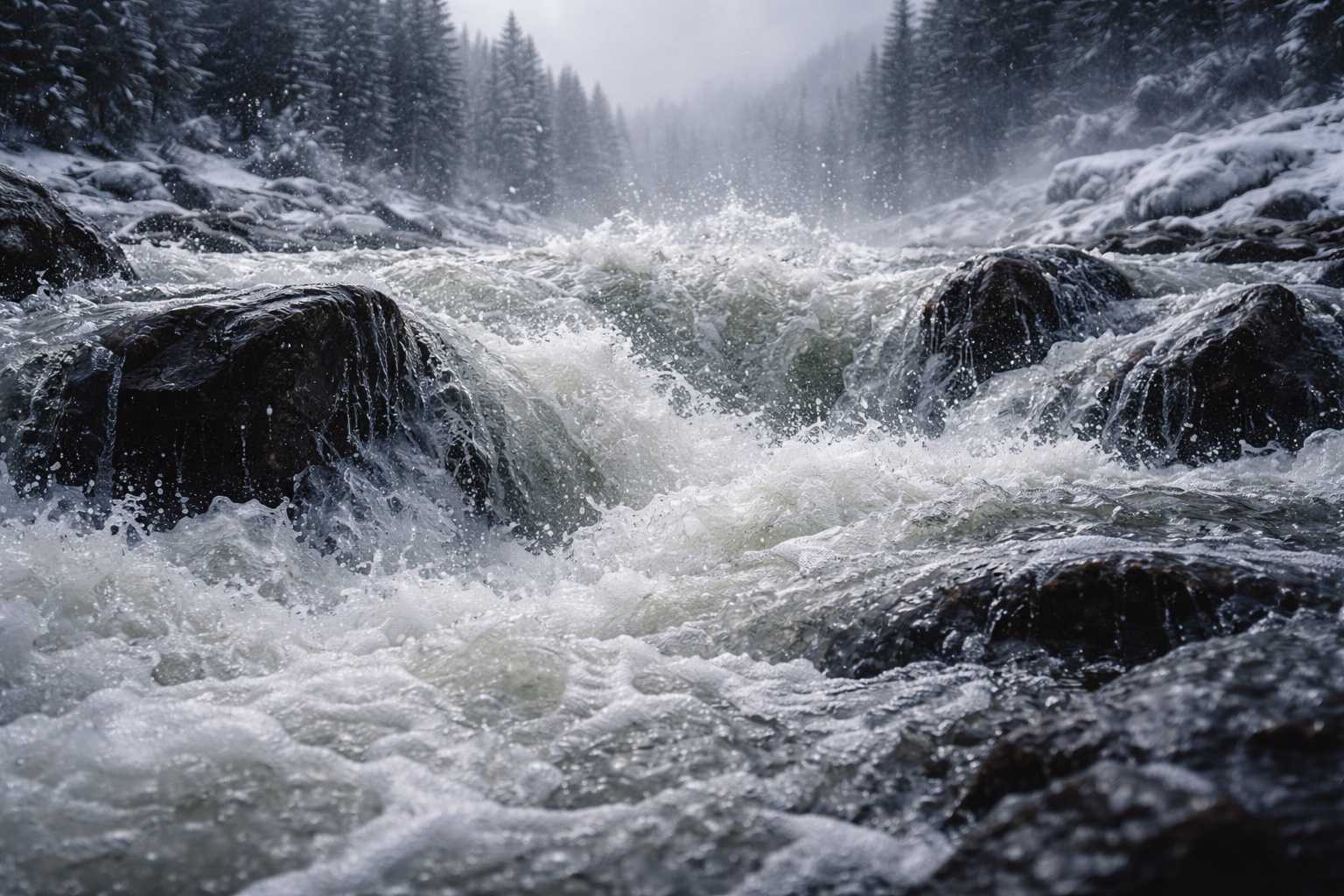
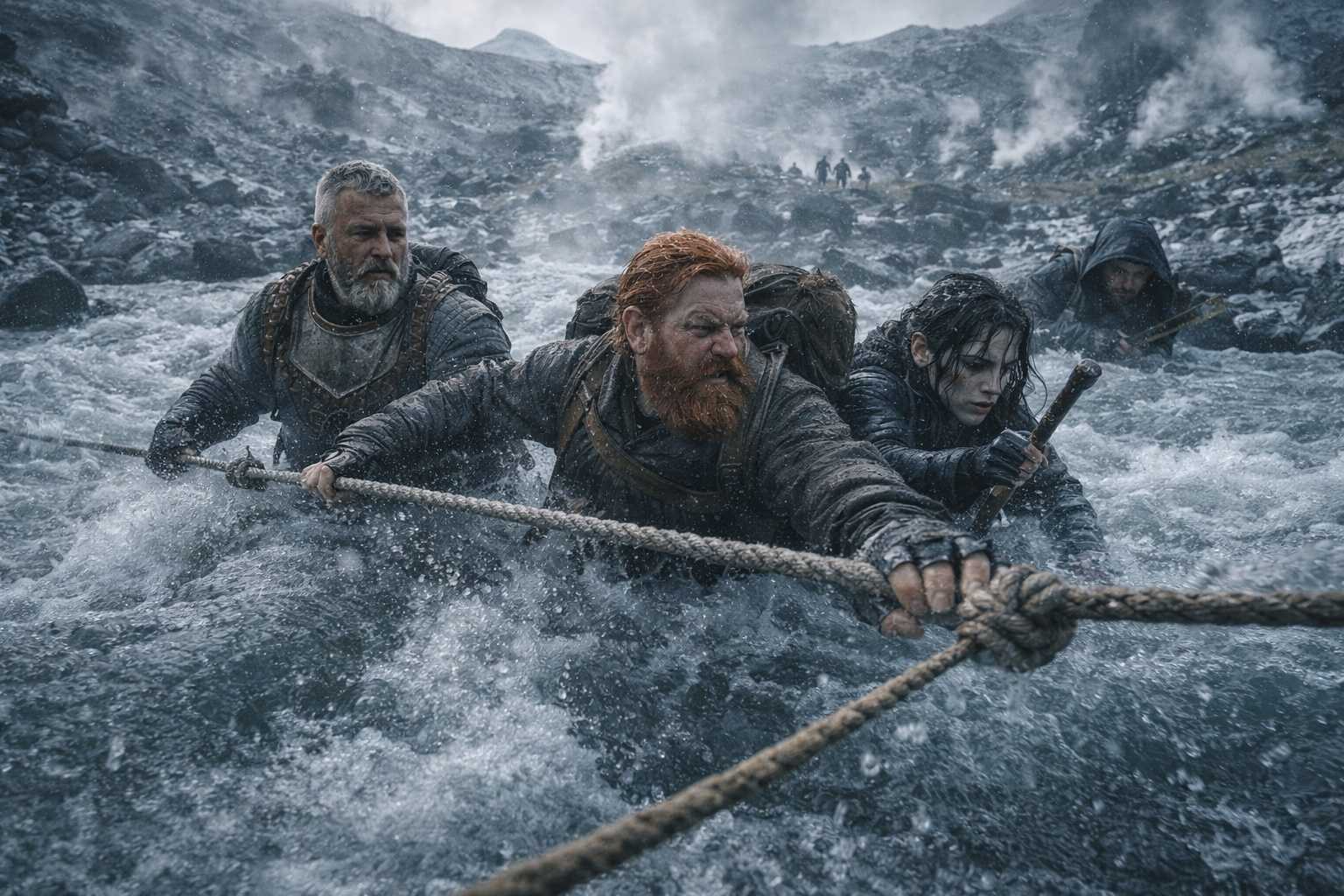
“We ford here,” Eldric said, testing the depth with a branch. “Current’s strong but manageable. Chest-deep at most. We rope together and cross.”
“No.” Dulint studied the river from the bank. “We follow it south until we find a shallower point. A crossing where the current is slower.”
“South takes us backwards. We’ve been arcing for two days. If we go south now, we’ll add another full day before we reconnect with the Beacon’s heading.”
“If someone falls in the current, we lose more than a day.”
“Then we don’t fall.” Eldric’s voice had the particular edge it developed when his patience was running against its limit. “I’ve forded rivers like this in worse conditions with soldiers who couldn’t swim. We rope together. We cross. We continue.”
Dulint looked at the water and saw six different ways it could kill them. The rocks. The current. The cold. A slip, a stumble, a moment’s bad luck. The seer’s words pulsed in his skull with the same rhythm as the Beacon in his pack.
“South,” he said.
Eldric drove the branch into the mud and turned to face him fully. Something had shifted behind his eyes. The careful deference he’d shown Dulint since Stonehold, the soldier’s habit of following the person who carried the objective, had worn thin. Not gone. Thin.
“Dulint. I’ve followed your lead since we left. Every slow path. Every cautious route. Every extra day spent hiding when we could have been moving. I’ve trusted your judgment because you’ve earned it. But this isn’t judgment anymore. This is fear.”
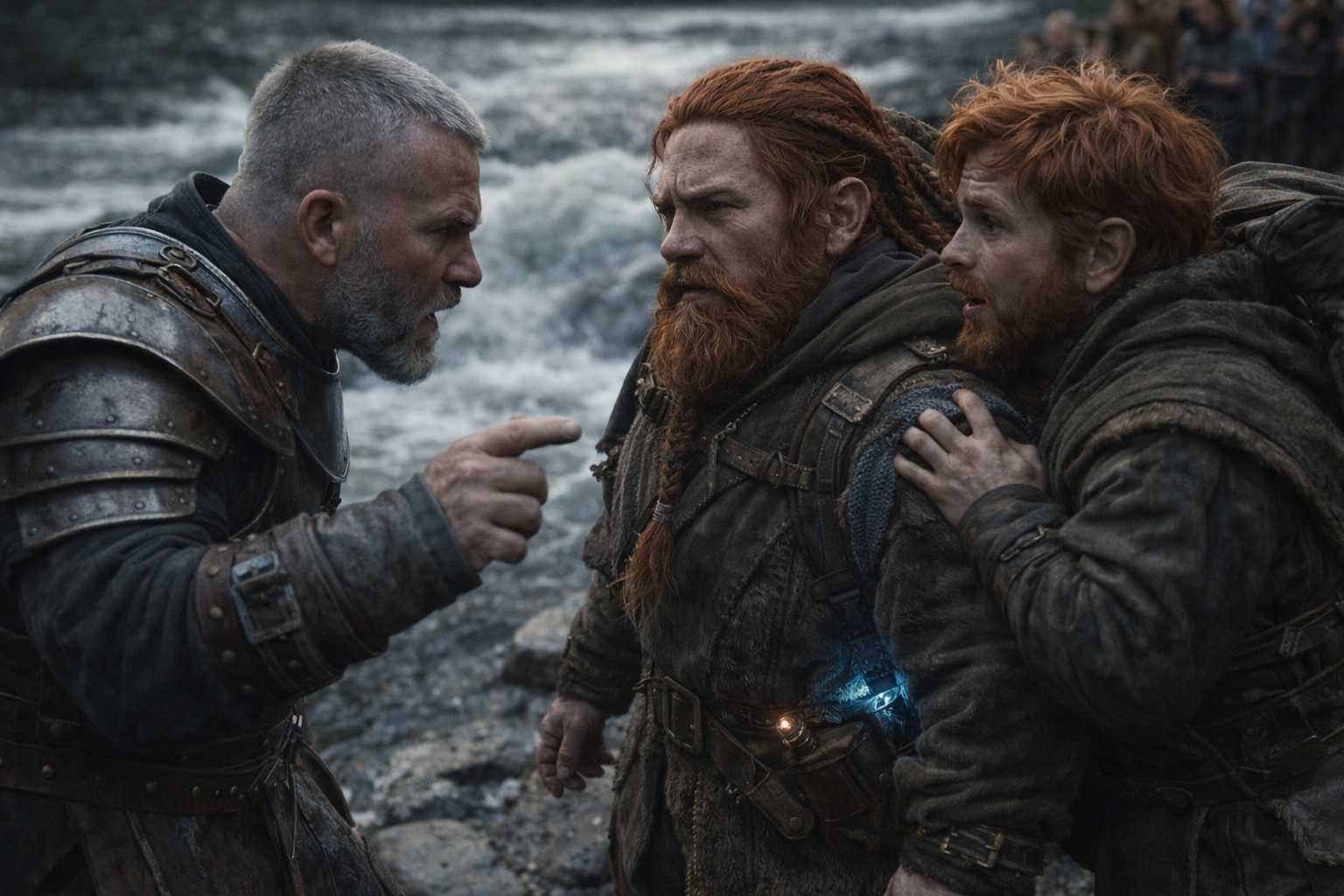
The word landed like a slap.
“I’m not afraid.”
“Then explain it to me.” Eldric stepped closer. He didn’t raise his voice. He didn’t need to. “Explain why every decision you’ve made for the past two weeks has been the slowest, safest, most conservative option available. Explain why a dwarf who’s spent fifty years in mines and caverns is suddenly afraid of a river crossing.”
“I’m being careful.”
“You’re being paralyzed. There’s a difference.”
Balin appeared at Dulint’s shoulder. “Eldric, back off.”
“No.” Eldric didn’t look at the young dwarf. His eyes stayed on Dulint. “Your uncle is hiding something. I don’t know what it is, but it’s affecting every decision he makes, and those decisions affect all of us.”
Xandor, sitting on a rock at the water’s edge, spoke without looking up. “Both positions have merit. The river is crossable but risky. Going south is safer but costly. Neither choice is wrong.”
“Neither choice is wrong,” Eldric agreed. “But consistently choosing the cautious option when time is the resource we’re running out of is wrong. We’re being hunted, Dulint. The hunters aren’t going to wait while we find the perfect crossing.”
Maris stood apart from the argument, watching the river. Her eyes were distant, unfocused. She’d been like that more often since the vision, retreating into a middle space between the world she could see and the world that showed itself to her without permission.
Dulint felt the weight of every eye on him. The boy who trusted him. The soldier who was losing trust. The druid who saw too much. The seer who was breaking under the strain.
And the pack on his back, with the Beacon inside, pulsing, pulsing.
“The seer—” he started.
Everyone went still.
“What seer?” Eldric’s voice dropped.
Dulint’s mouth opened. The words were there, balanced on the edge of his tongue, ready to fall. The seer in Stonehold told me I would fail. I don’t know what it means. I don’t know when. But every time I choose the cautious path, I’m trying to delay whatever failure is coming.
He couldn’t say it. If he said it, Balin would take risks to prove the seer wrong. Eldric would push harder, move faster, treat the prophecy as something to outrun. And Dulint knew, with the bone-deep certainty of old age, that rushing toward failure wouldn’t prevent it. Only hasten it.
“The seer said the journey would be long,” he said instead. “I’m trying to make sure we survive it.”
Eldric stared at him. Dulint could see the soldier weighing the words, testing them for the hollow ring of a half-truth.
“We ford the river,” Eldric said. “Here. Now. I’ll take point. Rope together. If anyone goes under, the others hold.”
Dulint looked at the white water, at the rocks, at the grey sky above.
“Fine,” he said.
They forded. Nobody fell. The water was cold enough to ache and fast enough to terrify, but Eldric’s experience held. They emerged on the far bank soaked, shivering, alive.
Eldric didn’t say anything about being right. He wrung water from his cloak, checked his sword, and started walking north.
Dulint followed, carrying the pack, carrying the secret, carrying the failure that hadn’t happened yet but felt closer with every step.
End of Chapter 22.2 —> 22.3: The Fracture: The Vision Toll
Previous Article
The Fracture: The PressureNext Article
The Fracture: The Vision Toll

Related Posts

© 2026, All Rights Reserved.
Quick Links
Legal Stuff