


Chapter 26 | Part 2 | The Evidence
The boot was sitting by the fire when Balin found it.
Not his uncle’s doing. Dulint had left the camp before dawn, stepping over Balin’s bedroll with the careful tread of someone who believed everyone else was sleeping. Balin had been awake for three hours, lying still, breathing evenly, performing the role of a sleeping nephew while his mind worked through the catalogue of wrong things.
The whispered argument. The fidgeting. The silence at meals. The way Dulint had stopped telling stories, as if every story contained a door he was afraid of opening.
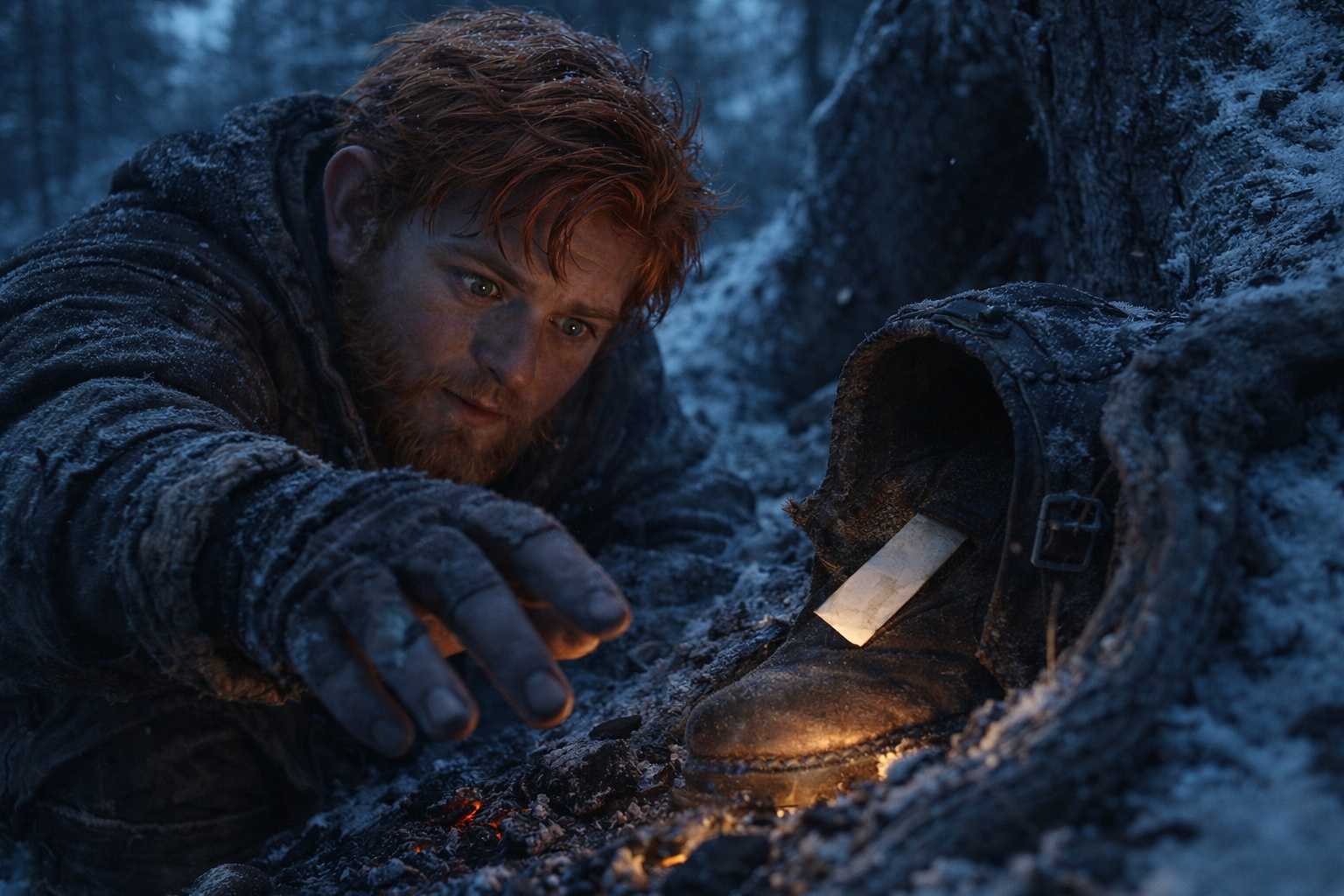
Dulint had gone to relieve Eldric at the perimeter, and in the process had knocked his left boot sideways. It lay tipped against a root, its mouth gaping open, the leather worn thin at the heel where decades of dwarven stride had ground it smooth. Nothing remarkable. Boots fell over.
Balin was pulling on his own boots when he saw the edge of paper.
A folded slip, barely larger than his thumb, wedged between the leather interior and the thick wool lining. The kind of place you’d hide something if you wanted it close but never seen. It had worked its way partially free when the boot tipped, one corner protruding like a pale tongue.
He should have left it. He knew that even as his fingers moved toward it. Whatever his uncle was carrying, it was Dulint’s business. His uncle had earned the right to his own burdens, his own choices, his own silences. Balin had been raised to trust that right. To honor it.
But trust went both directions. And his uncle had been whispering to himself in the dark, rehearsing a conversation about something that could not be stopped, and the man who had taught Balin to face hard truths was hiding from one.
He pulled the paper free.
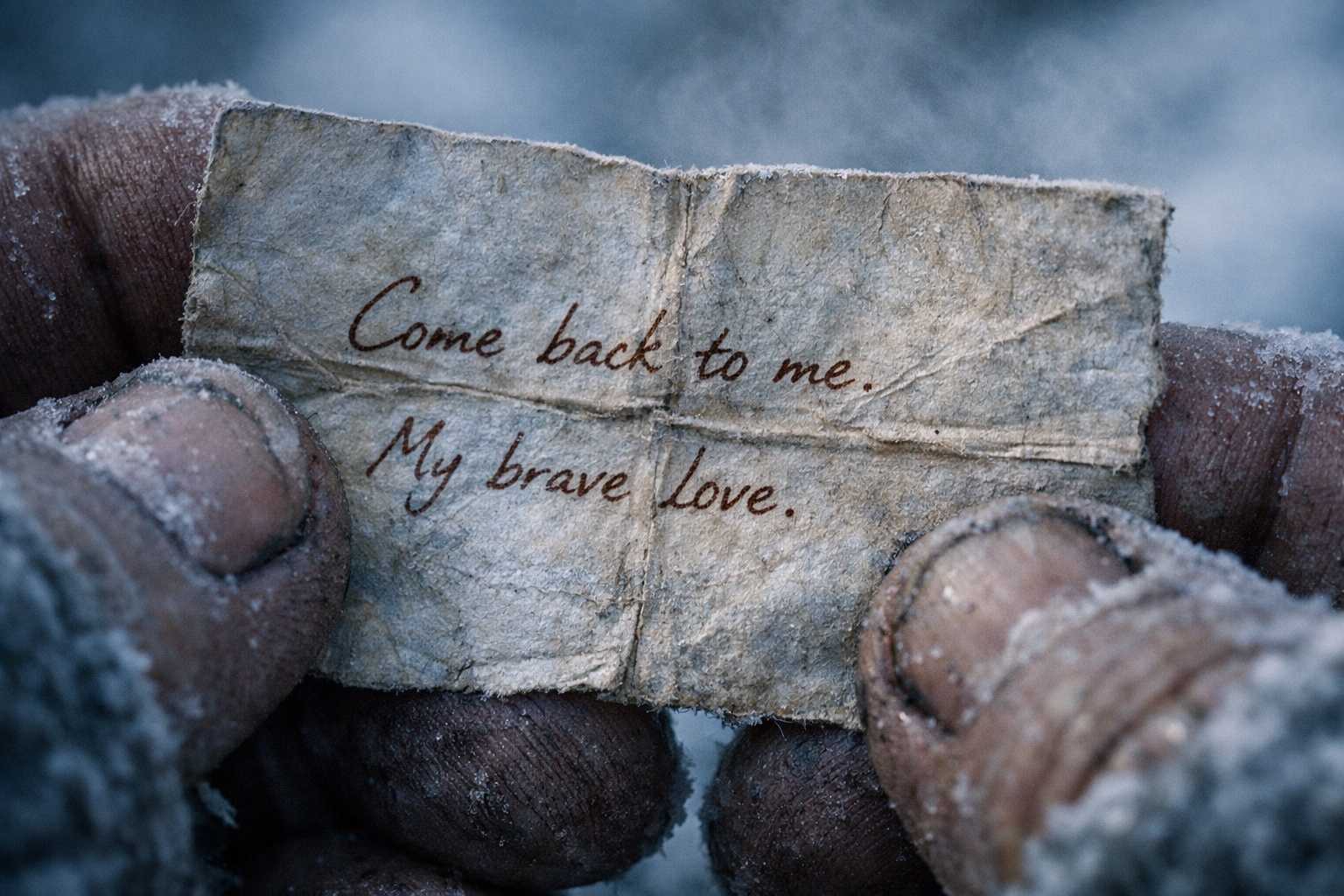
It was old. Not aged, not yellowed with years, but handled. The creases were soft from repeated folding and unfolding, the surface worn to the texture of cloth where fingers had pressed it flat again and again. Someone had read this note many times. Someone had memorized it and kept reading it anyway, the way you’d keep touching a wound to check if it still hurt.
The writing was small, precise, done in an ink that had faded to brown. Not Dulint’s hand. Dulint wrote like he talked, large and sprawling and impatient. This script was tight, controlled, each letter formed with intention. A woman’s hand, or a scholar’s. Someone who measured words the way an apothecary measured poison.
Two lines. The first ran across the center of the paper in that careful script:
Balin dies fast.

The second was written beneath, smaller, crammed into the remaining space as if added later, as an afterthought or a correction:
Only if I rush.
Balin read the words three times. His hands did not shake. That surprised him. He’d expected shaking, or heat, or the sick drop of the stomach that came with bad news. Instead there was a kind of clarity. Cold and total, like stepping into water that was deeper than expected and finding that his feet still touched the bottom.
His name. In someone else’s handwriting. In his uncle’s boot.
Balin dies fast.
Not “Balin might die.” Not “Balin could be in danger.” The certainty of it sat in the grammar like a stone. A statement. A prediction. A fact delivered without qualification, without hedge, without mercy.
And his uncle’s response, written underneath: Only if I rush.
The caution. The slow routes. The detours that had driven Eldric to confrontation and Balin to frustration. The refusal to move faster, the insistence on cover, the obsessive checking of sightlines that went beyond military training into something personal and desperate. Every decision Dulint had made since they left Stonehold arranged itself in Balin’s mind like tiles on a board, each one finding its place in a pattern he hadn’t been able to see because he’d been standing too close.
His uncle wasn’t cautious. His uncle was terrified. Of a specific thing, written on a specific piece of paper, that named a specific person.
Him.
Voices at the perimeter. Dulint’s rumble, Eldric’s clipped reply. They were coming back. Balin folded the note along its original creases, feeling how naturally the paper found its old shape, and slid it back between leather and wool. He pushed the boot upright and adjusted it so the opening faced the same direction it had before.
His hands were steady. His breathing was steady. His face, when Dulint ducked under the root-wall and met his nephew’s eyes with a tired half-smile, showed nothing but the usual morning grumpiness of a young dwarf who hadn’t slept well.
“Morning, lad.”
“Morning.”
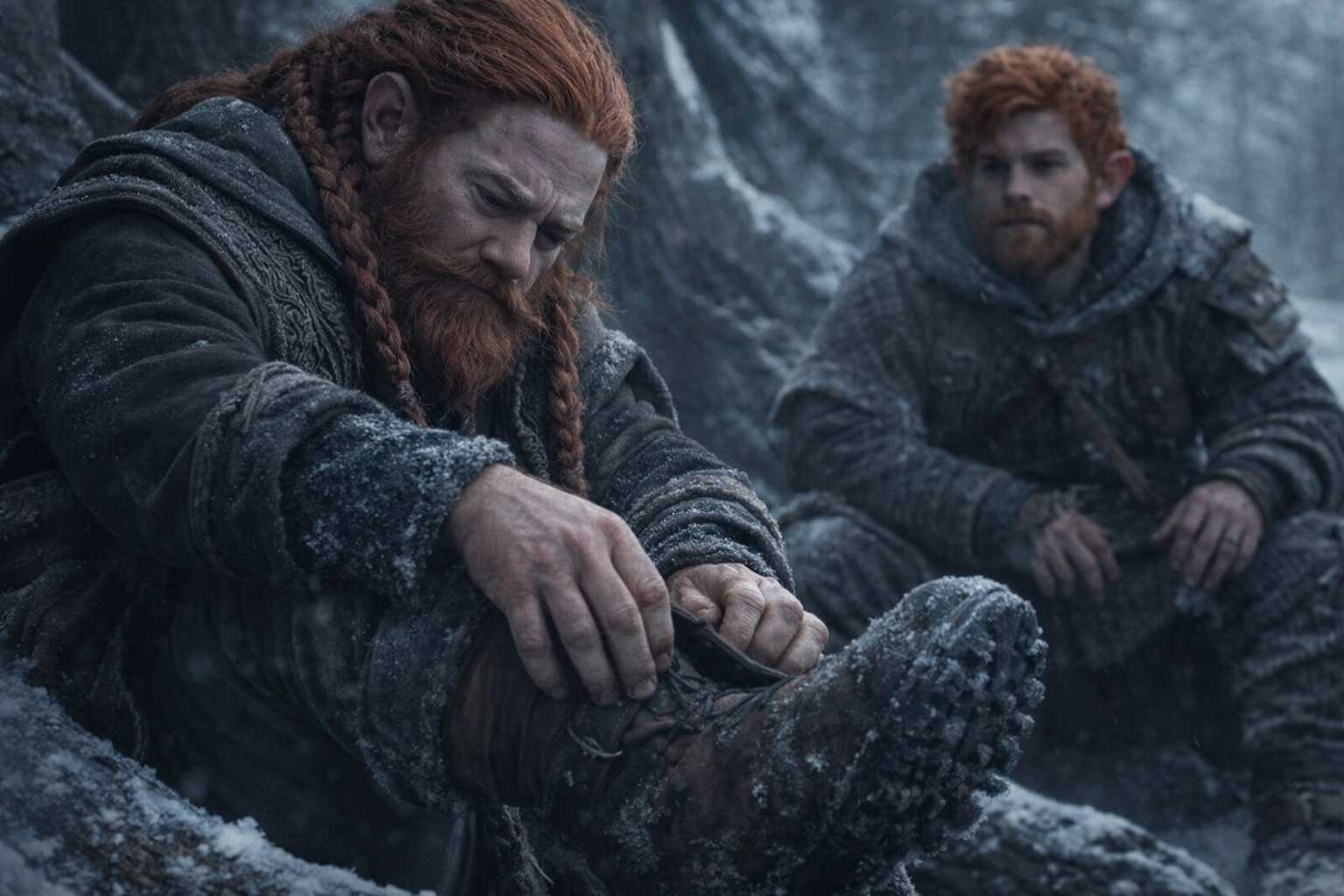
Dulint sat and pulled on his boots. Left, then right. His fingers found the interior of the left boot, pressed once against the lining where the paper hid, and continued lacing. The motion was practiced, automatic. He’d checked for the note every morning. Probably every time he put the boots on.
Balin watched and did not react. He ate dried venison and drank cold water and packed his bedroll with the same movements he always used. He counted. He catalogued. He filed.
Maris appeared from behind the root-wall, moving slowly. Her color was marginally better. Not good, but better. Xandor walked beside her, one hand near her elbow without touching it, ready to catch what he hoped wouldn’t fall.
“How are you?” Balin asked.
“Vertical,” Maris said. “Which is an improvement over yesterday’s ambitions.”
Balin smiled. It felt real enough. He was becoming good at that.
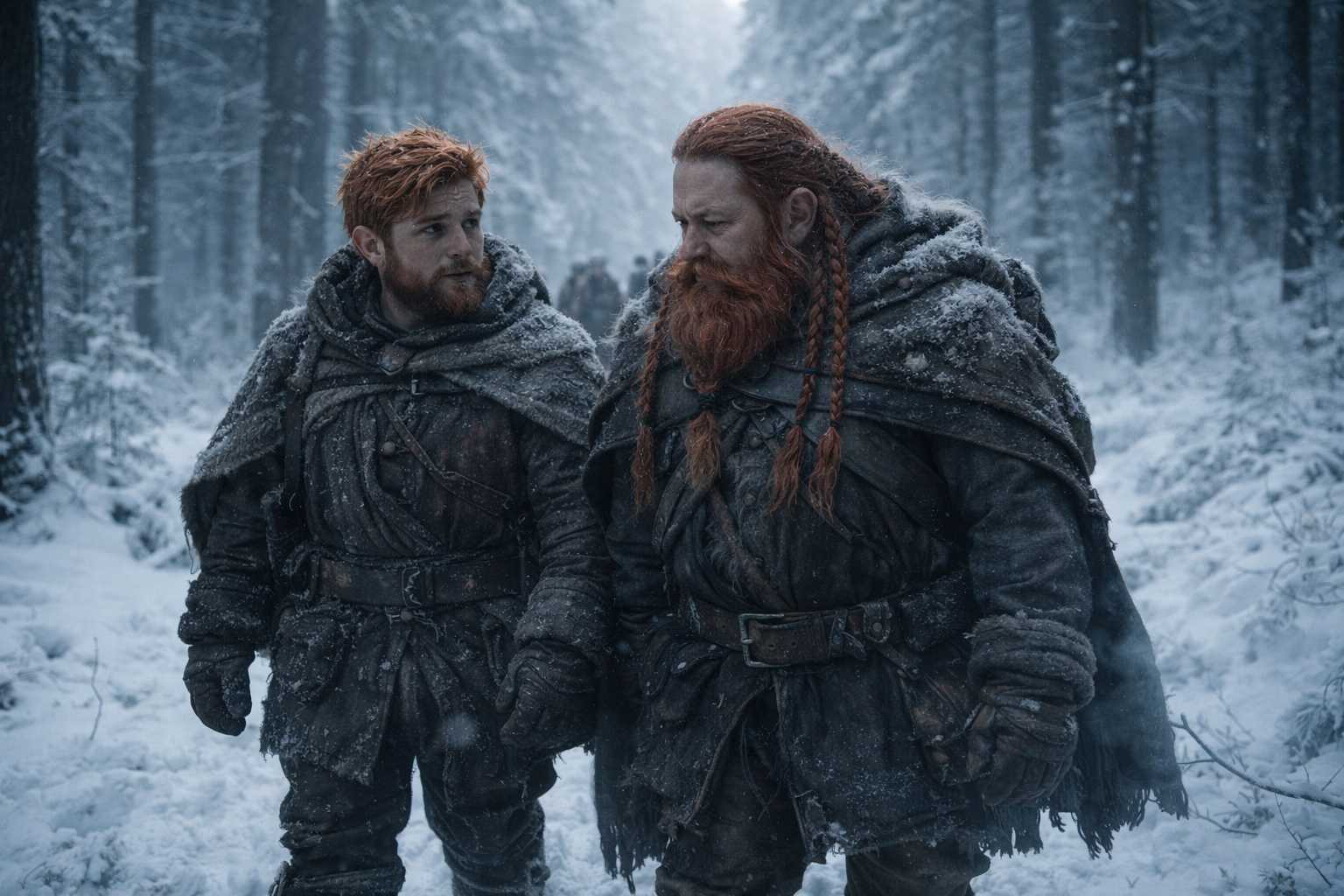
They packed. They moved. North, under canopy, steady pace. The compromise from the clearing held. Eldric led. Dulint walked behind him. Balin took his position beside Maris, whose careful steps had become a metronome he matched without thinking.
He walked and he carried his discovery and he did not share it. Not yet. There were pieces missing. The note told him something existed, something his uncle knew, something that involved Balin’s own death delivered as a certainty by someone whose handwriting spoke of precision and authority. But it did not tell him who had written it, or when, or why his uncle had chosen to carry the warning rather than speak it aloud.
Dulint had options. He could have told Balin. He could have told Eldric, or Xandor, or Maris. He could have turned around, gone home, kept his nephew safe behind stone walls. Instead he’d brought Balin north, into Frostgard, into the cold and the hunters and the bleeding seer and the Beacon’s call, and he’d done it while holding a note that said his nephew would die if he moved too fast.
Only if I rush.
His uncle hadn’t chosen safety. He’d chosen control. The careful routes, the slow pace, the obsessive caution. Not cowardice. Strategy. The desperate, grinding strategy of a man trying to outmaneuver a future that someone had already seen.
Balin needed to know who. He needed to know when. He needed to know exactly what his uncle had been told and by whom, because the note in the boot was a fragment, a conclusion torn from its argument, and fragments could be misread.
He would gather more. He would watch. He would wait. And when he had enough pieces to see the full shape of whatever his uncle was hiding, he would decide what to do with it.
The forest stretched ahead, grey and endless. The Beacon pulsed once, faintly, from Dulint’s pack.
Balin counted his steps and walked beside his uncle and said nothing.
End of Chapter 26.2 —> 26.3: The Crack: The Watch
Share
Previous Article
The Crack: The DoubtNext Article
The Crack: The Watch

Related Posts

© 2026, All Rights Reserved.
Quick Links
Legal Stuff